Mould remediation deals with affected materials and the moisture that supports mould growth. The work follows an agreed plan, called a scope. It involves more than wiping a surface or painting over it.
This guide explains the steps in mould remediation and how it differs from mould removal. It also covers cost, timing, written quotes and what to expect when the work is finished.
Mould Removal Versus Mould Remediation
Mould removal means taking away mould or affected materials. Mould remediation covers the wider job. It includes checking moisture, planning the work and controlling the work area. It may also include removal, detailed cleaning, drying and records.
Removing every mould spore from a normal indoor space is not a realistic goal. The plan should identify affected materials and the moisture source. It should set out who will fix the source and how the completed work will be checked.
When Mould Remediation May Be Required
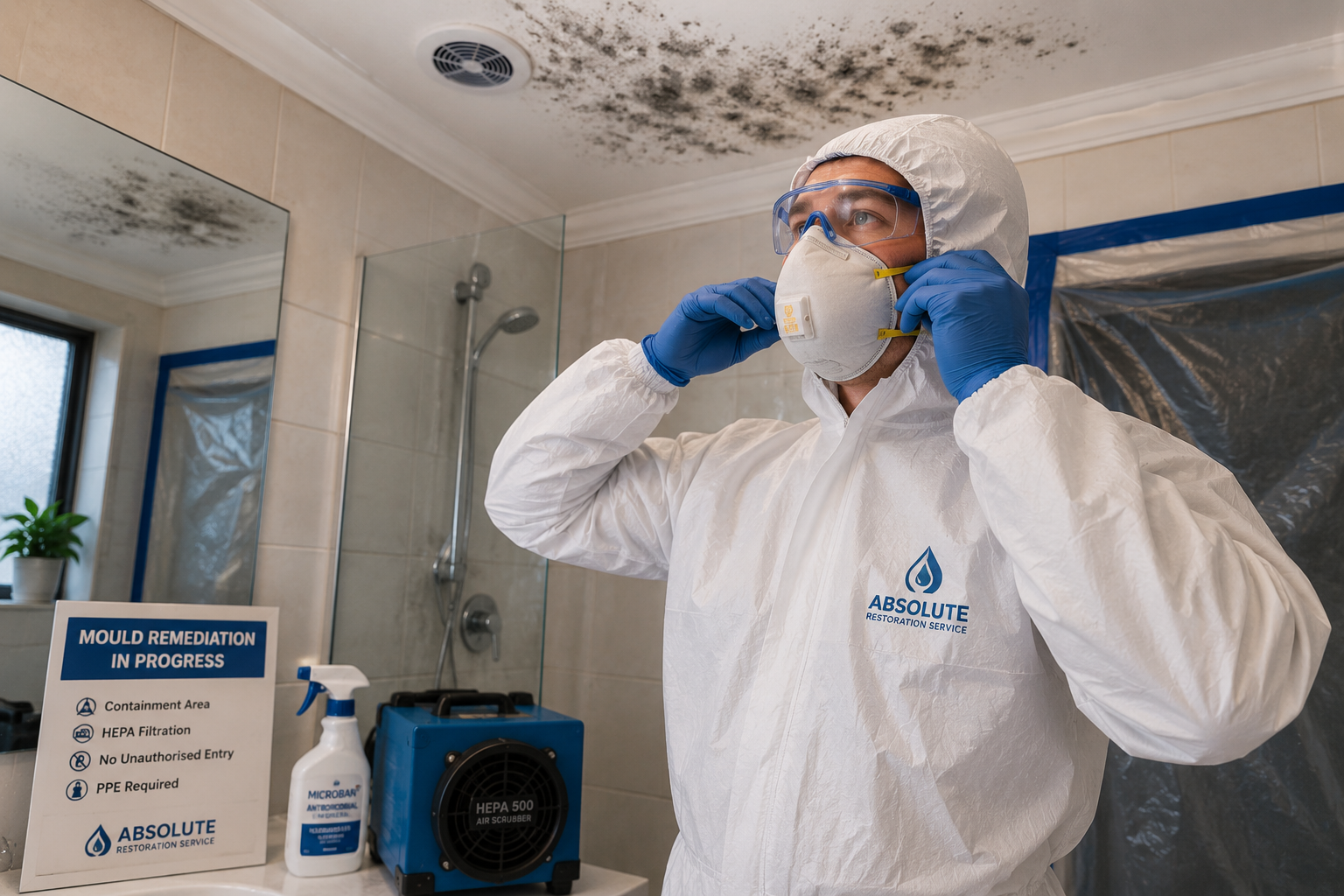
Professional help may be needed if mould covers a large area, keeps returning or follows water damage. Hidden growth, porous materials and unsafe access may also need expert advice. A small patch on a firm, washable surface differs from wet plasterboard, insulation, carpet or subfloor timber.
Check for hazards before work starts. These may include live electrical parts, unstable structures, sewage, asbestos and active leaks. Repairs to the moisture source need the right licensed or qualified trades.
The Typical Mould Remediation Process
- First review: Record past water damage, visible mould, access, who uses the space and known hazards.
- Moisture checks: Check materials that can be reached. Note areas that need a closer look.
- Work plan: Define the areas, controls, materials to keep and approved removal.
- Moisture repairs: Refer leaks, drainage, roof faults and building defects to the right trade.
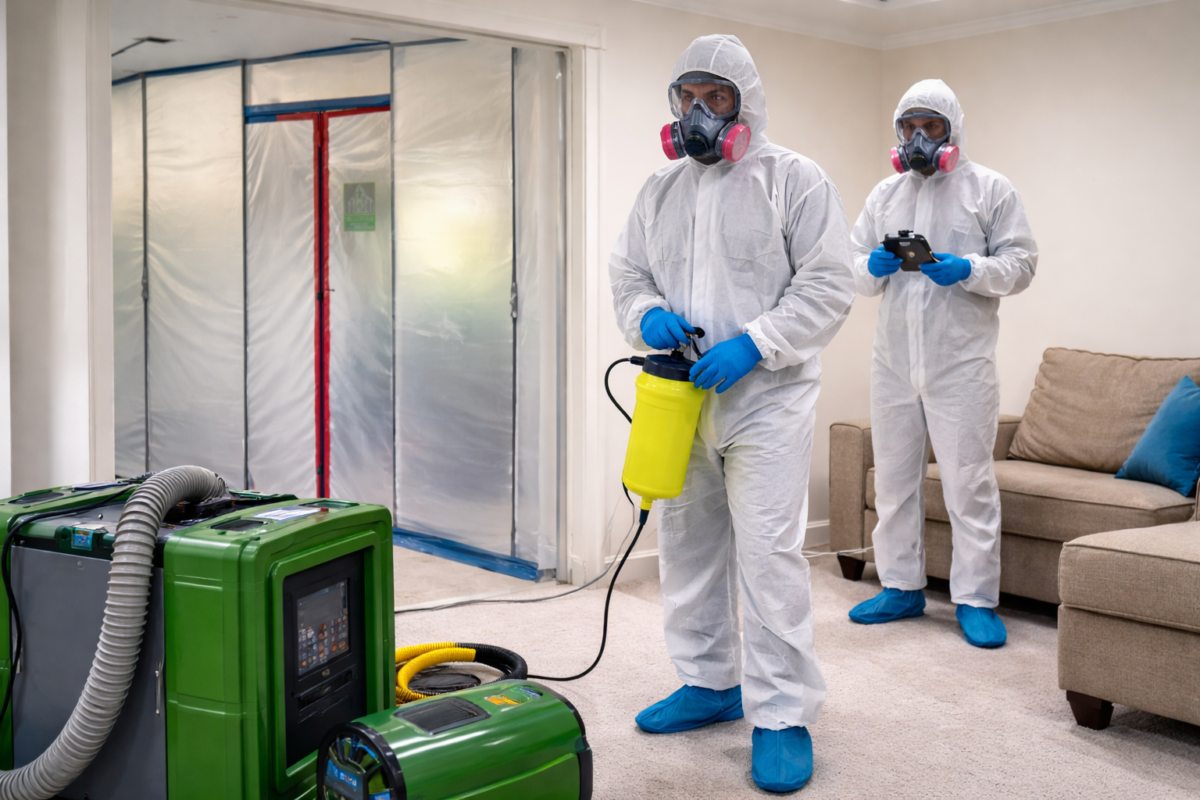
- Work-area controls: Restrict access and set up containment where needed.
- Material work: Remove approved materials that cannot be saved. Clean the surfaces that remain.
- HEPA filters: Use suitable filtered equipment to help control airborne particles.
- Drying: Use suitable equipment and record moisture levels in materials that can be reached.
- Handover: Record finished work, limits and any repairs or checks still needed.

How Moisture Investigation Supports the Scope
Technicians check the building’s history, past leaks, visible mould, smells and material condition. They use moisture meters to compare materials they can reach with suitable reference areas.
A thermal camera shows changes in surface temperature. Drying, insulation, airflow, sunlight, heating and building design can affect the image. It cannot see through walls, measure moisture directly or identify mould.
A check that leaves walls intact cannot show the condition of every hidden cavity. Opening an area may need approval. Electrical, plumbing, structural and asbestos hazards must be checked first.
How Much Does Mould Remediation Cost?
There is no single price that suits every mould job. The same size patch can involve different materials and hidden damage. A painted surface with condensation differs from wet plasterboard, insulation and framing after a long-term leak.
Cost factors can include:
- the affected area and number of rooms;
- the type and condition of materials;
- access, height and working around people using the property;
- containment and HEPA filter needs;
- approved removal, waste disposal and preparation for repairs;
- water removal or building drying;
- trade repairs and checks for hazardous materials;
- moving and storing contents;
- after-hours access or work in stages; and
- independent samples or final checks.
A written plan based on the site is more useful than a price based only on a photo. The quote should separate mould work from trade repairs, painting and independent checks. It should say which costs are included.
What a Mould Remediation Quote Should Include
- the areas checked and approved for work;
- assumptions and known limits;
- containment, access and equipment;
- materials to clean or remove;
- drying and moisture checks where needed;
- who handles contents and waste;
- which moisture repairs are included;
- records supplied at handover;
- who arranges independent checks; and
- how changes are approved if hidden damage is found.
Compare what each quote covers as well as the total price. Contractors may allow for different areas, work controls or repairs.
How Long Does Mould Remediation Take?
Timing depends on the area, access and work needed. Removal, moisture repairs, drying and final checks can all affect the schedule. Some jobs need one stage. Others need repairs and drying before mould work or rebuilding can continue.
The contractor should explain the order of work and what each stage depends on. A firm finish date needs an understanding of the site conditions.
What Happens During Handover?
Handover may include photos, moisture readings and notes on materials removed. It should record completed areas, limits and any repairs still needed. If an independent check is required after the work, the assessor should set the criteria and sampling plan.
DIY Cleaning Versus Professional Remediation
A small patch on a firm, washable surface may suit careful cleaning. Check the moisture source, hazards and safe access first. Avoid dry brushing, sanding or disturbing mould. Never mix cleaning chemicals.
Seek professional advice for large areas, mould that returns or hidden growth. Water damage, affected porous materials and unsafe access may also need expert help. Mould work does not diagnose illness or decide whether a person should stay in a building. Discuss health questions with a qualified healthcare professional.
Does Insurance Cover Mould Remediation?
Cover depends on your policy, the cause of damage and the insurer’s decision. Exclusions, maintenance terms and the excess also matter. Sudden water damage may be treated differently from gradual dampness. Only your insurer can confirm cover.
Record the damage when it is safe and notify your insurer promptly. Ask for guidance before approving non-urgent building work. ARS can supply records of restoration work. We cannot promise that a claim will be accepted.
What Remediation Cannot Guarantee
Mould can return if moisture remains, repairs are unfinished or new water damage occurs. Areas outside the agreed work may also remain affected. A contractor cannot guarantee that every hidden cavity is free of mould.
Discuss a Mould Remediation Scope
Absolute Restoration Service provides mould remediation in Melbourne. Our IICRC-trained technicians check moisture and plan controlled work to suit the site findings.
Call 1300 114 842 or contact ARS to discuss your property. Tell us where you can see mould, any past water damage and what you need the work to achieve.
Frequently Asked Questions
What is mould remediation?
It is a planned process for dealing with mould and moisture. It may include checks, work-area controls, removal, cleaning, drying and handover records.
Is removal the same as remediation?
No. Removal is one part of the job. Remediation also includes checks, work-area controls, decisions about materials and records.
How much does mould remediation cost?
The price depends on the area, materials, access and work needed. Removal, waste disposal, drying, repairs and final checks can all affect the cost.
How long does remediation take?
The time depends on the size of the job, access and repairs needed. Material work, drying and final checks can also affect the schedule.
Can I carry out remediation myself?
A small patch on a firm, washable surface may suit careful cleaning after checking hazards and moisture. Get professional advice for large areas, hidden mould or growth that returns.
Does insurance cover mould remediation?
It depends on your policy, the cause of damage and any exclusions. Your insurer decides whether the claim is covered.