MELBOURNE SUBFLOOR MOISTURE AND MOULD GUIDE
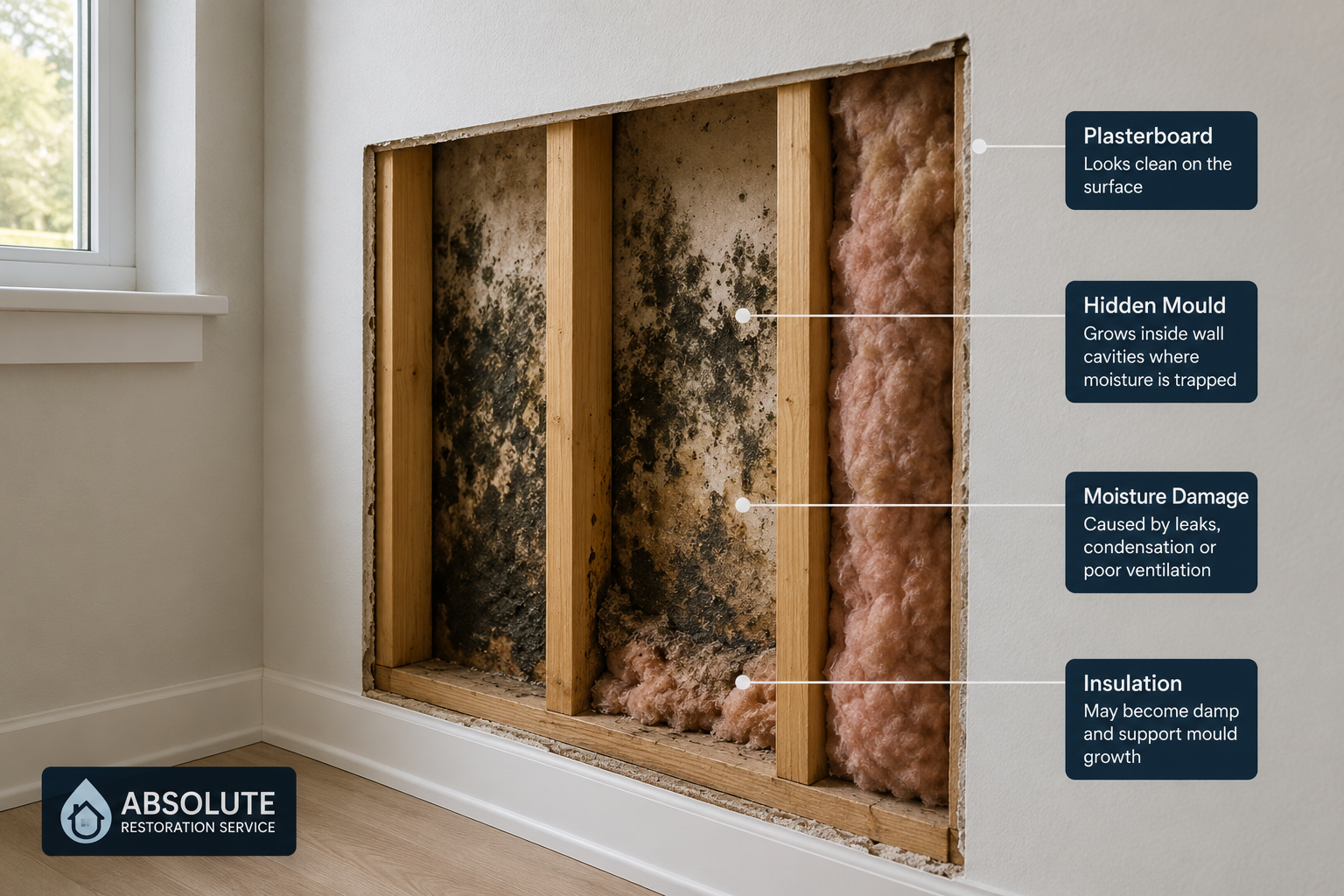
Mould can grow beneath a home when timber, soil or stored items stay damp. Leaks, poor drainage, wet ground and blocked vents can all add moisture. Condensation can also keep surfaces wet. Start with an assessment of areas that can be reached safely.
Absolute Restoration Service investigates subfloor mould and moisture across Melbourne. We check accessible areas and explain the cleaning and drying needed. We carry out the agreed work. A suitable building professional must assess code compliance, structural safety and design.
Call 1300 114 842 or visit our crawl-space and subfloor mould service.

Why Mould Develops Beneath Melbourne Homes
The space beneath a raised floor can stay cool and damp. Water may enter from soil, drains, pipes or building leaks. It can evaporate into the air, then condense on cold surfaces. Damp timber and dust can support mould growth.
Common contributors include:
- Leaking water, waste or stormwater pipes
- Water draining towards the building
- Groundwater or soil that stays wet
- Blocked vents or poor vent placement
- Extensions or garden beds blocking airflow
- Ground moisture that is not controlled
- Water entering after storms or floods
- Wet insulation, stored items or building waste
- Timber left damp after an earlier leak
Signs a Subfloor Assessment May Be Needed
- Persistent musty odour inside the home
- Visible growth on bearers, joists, boards or stored materials
- Damp soil, standing water or corroded metal components
- Soft, stained or elevated-moisture timber
- Recurring mould in rooms above the subfloor
- Flooring movement, cupping or deterioration
- Condensation on subfloor surfaces, ducts or pipes
- A history of leaks, drainage problems or flooding
These signs do not show the cause or full extent of the damage. Timber decay, termites and building faults need checks by the right specialist.
Safe Access Comes First
Subfloors may contain wiring, sharp waste, pests, sewage or damaged materials. Some materials may contain asbestos. Low spaces, weak floors and unstable ground can also make access unsafe. Do not enter until safe access has been confirmed.
The right licensed or qualified trade must deal with electrical, plumbing, drainage and building hazards. Asbestos, pests and other hazards may need a specialist. Our work starts only when the area is suitable for the agreed tasks.
Subfloor Moisture Investigation
We ask about past leaks and check visible damage, access and vents. Moisture meters help us check timber and other materials we can reach. Temperature and humidity readings help us understand the conditions.
A thermal camera shows changes in surface temperature. These patterns can guide closer checks. The camera cannot see through floors, prove mould is present or locate a leak on its own.
Our Subfloor Mould Remediation Process
- Check safe access: Review the hazards and access. Note any work that needs another specialist.
- Assess moisture: Record damp areas, visible mould and affected materials. Check drainage and vents.
- Plan source repairs: Discuss leaks, drainage and building repairs with the right trade.
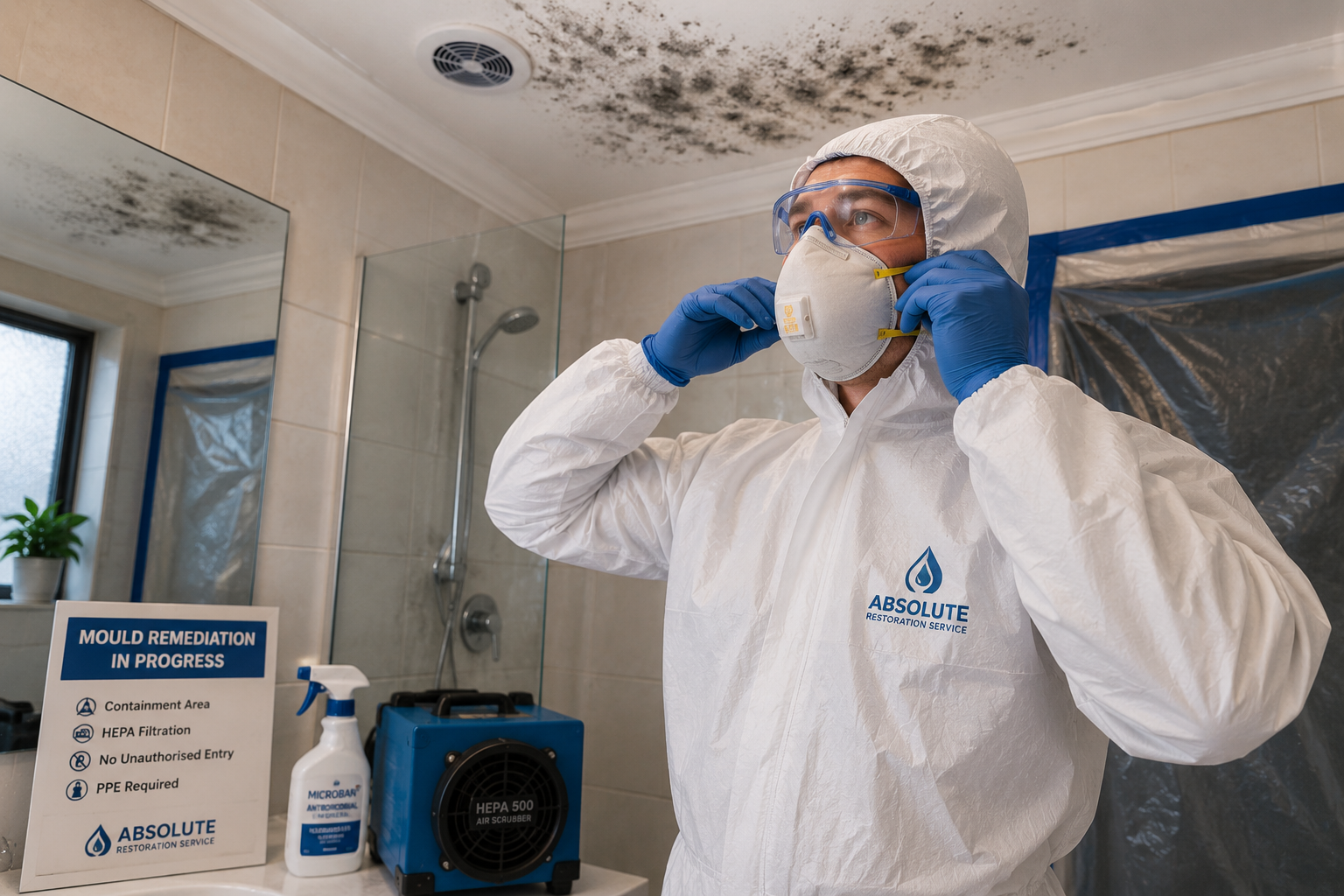
- Set up controls: Limit access and use suitable containment, protective gear and HEPA air filtration.
- Assess materials: Remove affected materials that cannot be restored, with approval.
- Clean surfaces: HEPA vacuum and clean the surfaces we can reach. Use methods suited to each material.
- Dry suitable materials: Plan airflow and drying so particles do not spread.
- Handover: Record completed work. Explain any repairs, ventilation changes or further checks needed.
Our IICRC-trained team plans the work to suit the property. Mould may return if dampness remains or a new leak occurs.
HEPA Cleaning and Air Management
HEPA equipment helps control airborne particles during mould removal. It does not replace surface cleaning or removal of materials that cannot be restored. We position equipment to suit access, containment and the rooms above.
Fans blowing across mould can spread particles. We assess the area and set up suitable controls before using air movers for drying.
Subfloor Structural Drying
Timber and other materials may need drying after a leak or flood. We check their condition, the water source and any contamination. Access, temperature and available power also affect the equipment we choose.
We use readings to track drying progress. Drying time varies with site conditions and the affected materials. A builder, engineer or other suitable professional may need to assess damaged timber.
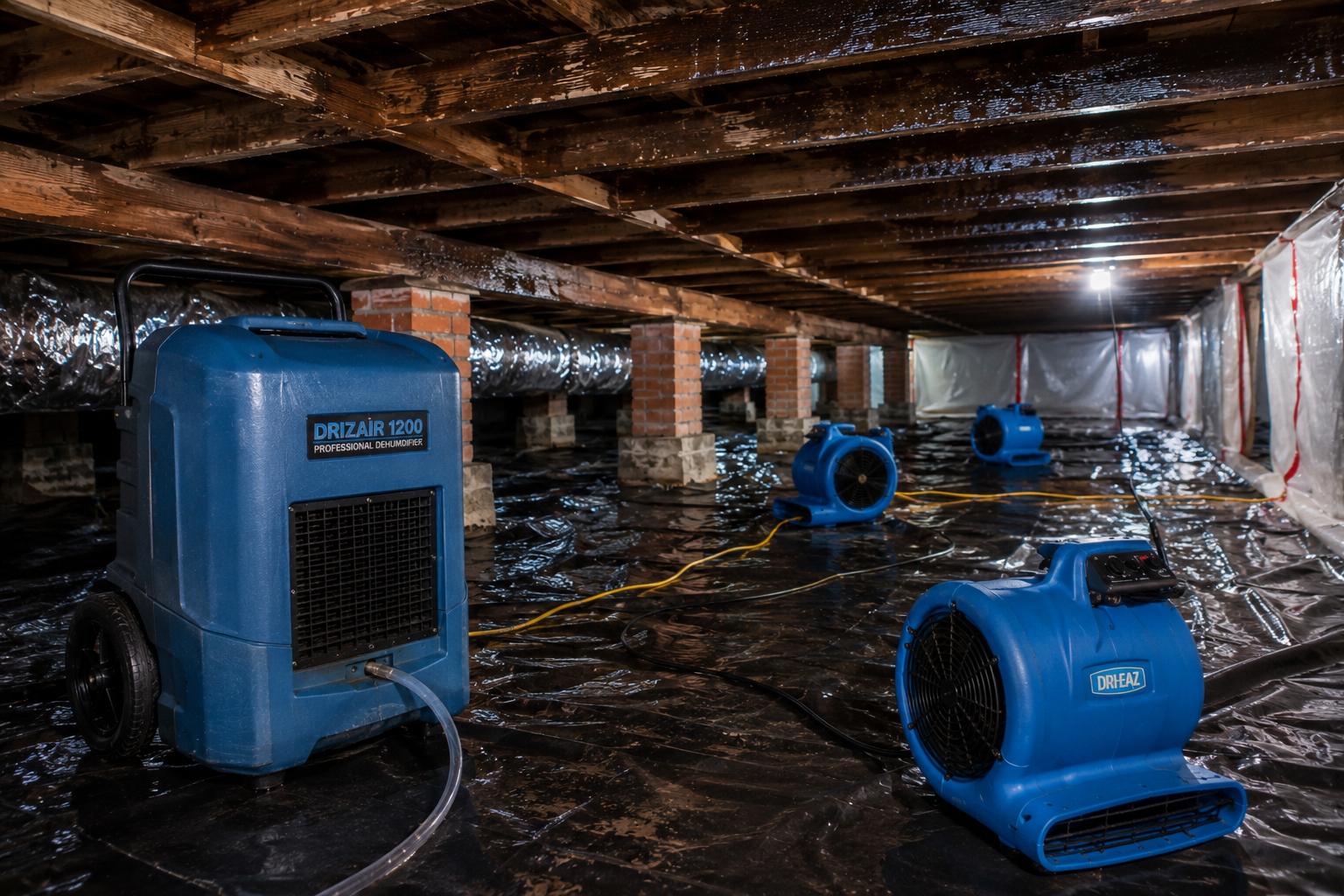
Commercial dehumidifiers and high-velocity air movers are used beneath a suspended timber floor to remove excess moisture, dry structural timber and help reduce the risk of mould growth following water damage.
Ventilation and Moisture Control
A suitable ventilation system can help manage damp air beneath the floor. It does not fix leaks or drainage faults. Standing water and groundwater problems also need attention.
Vents and powered fans need a design that suits the property. The design must consider air paths, outlets, noise and electrical work. Outdoor conditions and the rooms above also matter. Qualified trades must design and install the work to meet the applicable requirements.
About NCC Compliance
The National Construction Code (NCC) sets requirements for building design and construction. Mould cleanup alone does not show that a building meets the code. Existing buildings, alterations and ventilation designs need their own assessment.
ARS can record moisture conditions and completed mould removal work. We do not certify building-code compliance, structural safety or ventilation design. A suitable building surveyor, designer, engineer or contractor must assess those matters.
Rental, Strata and Managed Properties
Subfloor work may affect tenants, owners, property managers and common property. Confirm who can approve access and work before it starts. Checks that open up building materials need permission. Shared drains, services and structures may need input from several parties.
ARS does not decide property boundaries, tenancy duties, legal liability or insurance cover.
Health and Testing Limitations
Mould colour alone does not identify its type or show the health risk. ARS does not diagnose illness or decide whether a property caused symptoms. Speak with a qualified healthcare professional about health concerns.
Not every subfloor job needs samples. Testing should answer a clear question. A suitable professional or laboratory should plan the tests and explain the results.
When to Request Professional Subfloor Assistance
Call Absolute Restoration Service on 1300 114 842 when a subfloor has persistent odour, damp timber, visible growth, water entry or recurring indoor mould. For non-urgent enquiries, use the ARS contact form.
Subfloor Mould Remediation FAQs
What causes mould beneath a suspended timber floor?
Leaks, poor drainage, wet soil and blocked vents are common causes. Condensation and poor airflow can also keep timber damp. Mould may grow if materials stay wet after a leak or flood.
Can subfloor mould affect rooms above?
Air and odours may pass through gaps around floors, pipes and cables. Each property needs an assessment to understand the issue and the work needed.
Does adding ventilation remove existing mould?
No. A suitable system may help manage damp air. It does not remove existing mould or fix leaks and drainage problems.
Can ARS certify that a subfloor is NCC compliant?
No. We record the conditions we can access and the mould removal work completed. A qualified building professional must assess NCC compliance and building design.
How is subfloor mould remediated?
We assess safe access, moisture and affected materials. Work may include containment, HEPA vacuuming, cleaning and drying. Some materials may need removal. We also explain which moisture sources need repair.
When should I arrange a subfloor inspection?
Arrange an assessment for musty smells, damp timber, visible mould or repeated mould indoors. Leaks, floods, poor drainage and blocked vents are also reasons to seek advice.