Energy Recovery Ventilation Melbourne
Fresh-air ventilation assessment, design and installation support for Melbourne homes and selected buildings.
An energy recovery ventilation system brings filtered outdoor air into your home and removes stale indoor air. It also transfers some heat and moisture between the incoming and outgoing air.
A well-designed ERV system can help with airflow and comfort. It may also help manage indoor moisture. Leaks and other sources of dampness still need to be fixed.
Call 1300 114 842 or request an ERV assessment for your Melbourne property.
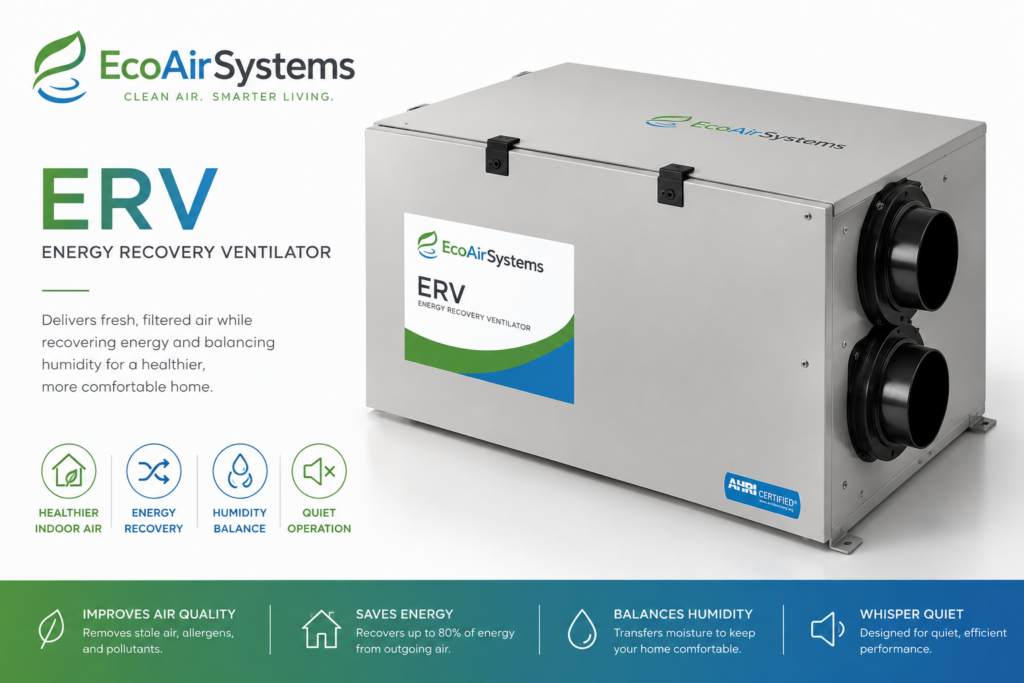
What Is an Energy Recovery Ventilator?
An energy recovery ventilator, or ERV, uses fans to move air into and out of a building.
One air path supplies filtered fresh outdoor air to selected rooms. Another removes stale air from suitable points inside the home.
The air passes through an exchange core. This core transfers some heat and moisture between the two air paths.
The system gives you controlled air exchange while windows are closed. Its performance depends on the unit, duct layout, airflow settings and upkeep.
How an ERV System Works
- Draw in outdoor air: Air enters through an intake placed away from pollution sources.
- Filter the air: Filters capture particles according to their filter rating.
- Recover energy: The core transfers some heat and moisture between the air paths.
- Supply fresh air: Ducts carry the incoming air to selected living areas and bedrooms.
- Remove stale air: Air leaves through extract points set out in the design.
- Set the airflow: The installer measures and adjusts supply and exhaust rates.
The layout should suit the home and how it is used. Unit size alone does not tell you how well the system will work.
When Could an ERV Assessment Help?
An assessment may be useful for:
- Airtight new homes or major renovations
- Bedrooms and living rooms that feel stuffy
- Homes with recurring condensation
- Properties where noise limits open-window use
- Homes needing a filtered outdoor-air supply
- Moisture planning after mould remediation
- Apartments with space for a suitable system
Condensation can have several causes. Cold surfaces, gaps in insulation, leaks and poor local exhaust may all play a part.
ARS checks the broader moisture conditions before recommending equipment.
Potential Benefits of Energy Recovery Ventilation
A suitable system can provide:
- Steady, controlled air exchange
- Filtered outdoor air
- Less heat loss or heat gain than the same airflow without energy recovery
- Support for indoor moisture management
- Removal of stale air and some indoor odours
- Ventilation while windows stay closed
- Airflow settings matched to the design
Results depend on the building, outdoor conditions and how the system is used. An ERV does not remove every pollutant or guarantee a mould-free home.
ERV, HRV and Exhaust Fans
Energy Recovery Ventilation
An ERV transfers both heat and some moisture between air paths. The best choice depends on the climate, indoor moisture and the building.
Heat Recovery Ventilation
An HRV mainly transfers heat between incoming and outgoing air. We review the project needs and unit data when comparing HRV and ERV options.
Local Exhaust Fans
Bathrooms, laundries and kitchens still need suitable exhaust. These systems deal with moisture and other pollutants close to the source.
Kitchen rangehood exhaust needs separate design consideration. It should only connect to an ERV where the equipment and design allow it.
Our ERV Assessment and Installation Process
1. Discuss Your Property
We ask about room use, stale air, condensation and past mould issues. We also review existing fans and known leaks.
Active leaks or building faults may need repair first.
2. Review the Layout
We consider room sizes, occupancy and duct routes. The design also needs suitable intake and outlet positions.
Noise, drainage, controls and access for servicing are part of the review.
3. Select the Equipment
We check airflow, duct resistance, filter options and sound levels. The unit must suit the required airflow once connected to the ducts.
A larger unit is not always the better choice.
4. Coordinate Installation
The work may include ducts, grilles, supports, power and drainage. Suitable licensed trades are used where required.
Building access, fire protection, waterproofing and acoustic needs can affect the scope.
5. Measure and Balance Airflow
Supply and exhaust airflow should be measured, adjusted and recorded. This helps check that the installed system matches the design.
We also explain the controls, operating modes and filter access.
6. Plan Maintenance
Filters and internal parts need regular checks. Service needs depend on the unit, local conditions and hours of use.
Access for cleaning and filter changes should be planned before installation.
EcoAirSystems ERV Options
ARS works with EcoAirSystems equipment as one option for your property.
We select the model and layout to suit the airflow needs and available space. Your quote will confirm the equipment, specifications and installation scope.
What Affects ERV Installation Cost?
The price depends on the airflow needed, unit choice, duct layout and access. A simple layout may need less ducting than a home with several floors or limited ceiling space.
Your quote should set out the unit model, filters, ducts, grilles and controls. Ask whether electrical work, drainage, airflow measurement and balancing are included. Any building repairs or approvals should also be clear.
Compare the proposed design and installation scope as well as the unit price. Ask how filters will be accessed and what maintenance the selected model needs.
What Needs to Be Checked Before Installation?
- Outdoor air: Intake location and filters need to suit nearby roads, smoke and other sources.
- Noise: Unit position, ducts and grilles all affect sound.
- Air balance: Supply and exhaust rates need to suit the design.
- Condensation: Duct insulation and drainage need to suit the location.
- Service access: Filters and internal parts must be easy to reach safely.
- Building faults: Roof leaks, plumbing faults and rising damp need their own repairs.
Related Indoor Environmental Services
- Indoor Air Quality Assessment Melbourne
- Indoor Air Quality Matters Melbourne
- Subfloor Ventilation Melbourne
- Mould Removal Melbourne
- Moisture Investigation Melbourne
How an ERV Works With Heating and Cooling
An ERV provides mechanical ventilation. Its core acts as a heat exchanger, transferring some energy between outgoing and incoming air.
It can work alongside a heat pump or other HVAC systems. The ERV supplies outdoor air, while the heating or cooling equipment manages room temperature.
Energy recovery can reduce the heating and cooling load from ventilation. The effect on energy cost depends on the unit, airflow, weather and how the home is used.
Frequently Asked Questions
Will an ERV stop condensation?
It may help where limited ventilation is part of the problem. Cold surfaces, insulation, leaks and indoor moisture also matter. An assessment helps identify the causes.
Will an ERV prevent mould?
An ERV can help manage ventilation and moisture. It does not remove existing mould or fix leaks. Those issues need separate assessment and treatment.
Does an ERV heat or cool the home?
It recovers some energy from outgoing air. This helps reduce the heating or cooling load from ventilation. It does not replace your heater or air conditioner.
How often do ERV filters need changing?
Follow the unit maker’s instructions and check filters regularly. Dust, outdoor air conditions and hours of use affect how often they need cleaning or replacement.
Can an ERV be fitted to an existing home?
Often, yes. We need to check space, duct routes, power, noise and access. A site assessment helps confirm what is practical.
Do apartments need owners-corporation approval?
Approval may be needed for external grilles, wall openings or work on common property. Check with the owners corporation and relevant professionals before work starts.
Book an ERV Assessment in Melbourne
Discuss your airflow, condensation or stale-air concerns with Absolute Restoration Service.
Call 1300 114 842 or request an energy recovery ventilation assessment.