When to Arrange a Mould Inspection
- Visible or recurring mould growth
- Persistent musty or damp odours
- Water staining, bubbling paint or damaged plaster
- Condensation on windows, walls or ceilings
- A previous leak, flood or stormwater event
- Damp carpet, flooring, cabinetry or stored contents
- Suspected roof-space or subfloor moisture
- Records needed for a property manager or removal quote
For health concerns, speak with a healthcare professional. ARS checks property conditions. We do not diagnose illness or determine whether mould caused symptoms.
Our Mould Inspection Process
- Discuss the history: tell us about leaks, repairs, affected rooms and why you need an inspection.
- Visual inspection: we record visible growth, stains and damage in areas we can reach. We also check for condensation and poor airflow.
- Check moisture: we use suitable meters to check materials and find damp areas that need a closer look.
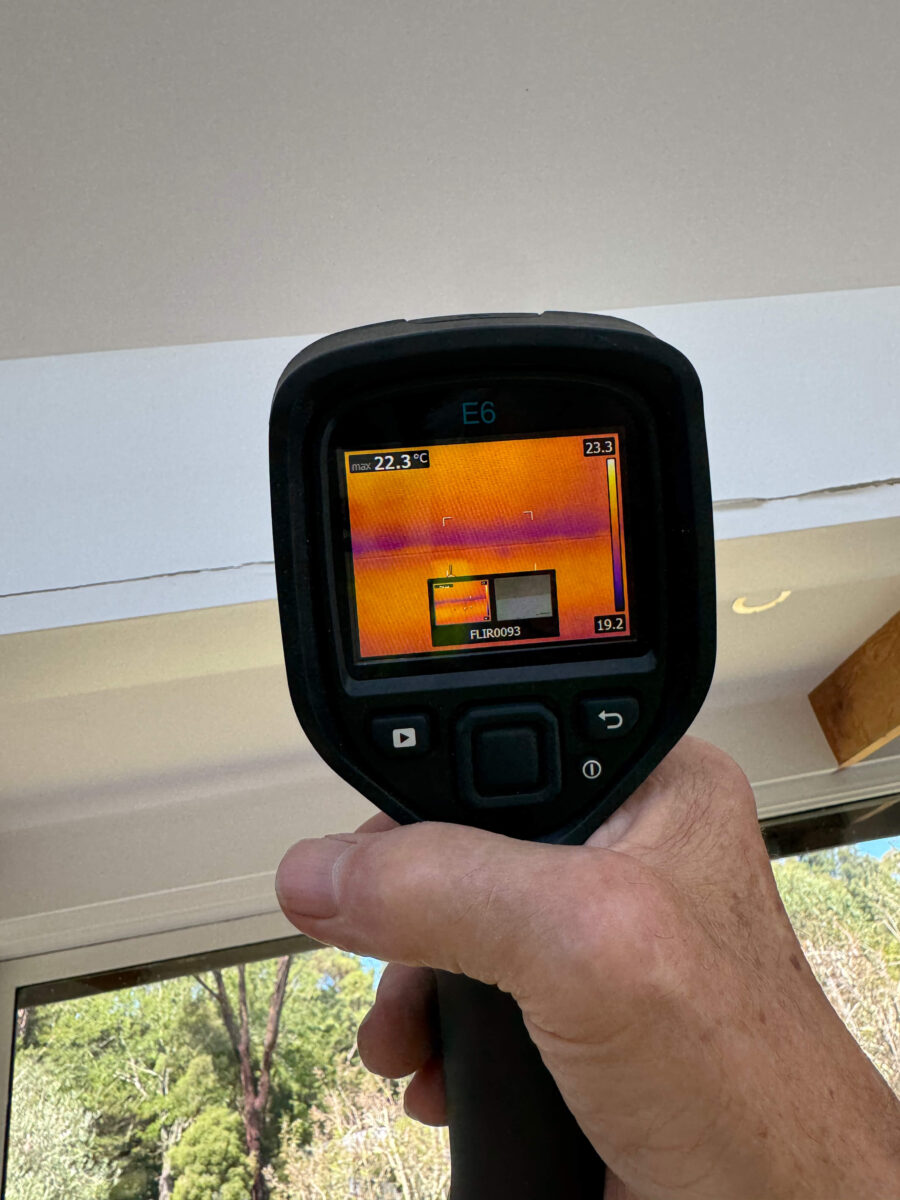
- Use thermal imaging where helpful: we compare surface temperature patterns with readings and visible signs.
- Assess materials: we check what is affected and consider where water may have spread.
- Explain the next steps: these may include repairs, drying, mould removal, sampling or approved checks inside walls.
- Provide agreed records: we record the findings and explain the limits of the inspection.
How Thermal Imaging Helps
A thermal camera shows changes in surface temperature. Dampness may affect these patterns, but so can sunlight, heating, insulation and air movement. The camera does not see through walls or directly detect mould or water.
We check the images against moisture readings, visible signs and the building history. A plumber, roofer or other suitable trade may need to find and repair a leak.
When Sampling May Be Considered
Not every inspection needs air, surface or material samples. Sampling should answer a clear question. Ask what a test for mould spores or the presence of mould would add to the findings.
Before sampling, we explain where samples would be taken and why. The plan should cover the method, lab work and limits of the results. One sample cannot describe every room or surface.