Mould Removal Melbourne

Absolute Restoration Service provides mould removal and remediation across Melbourne. We help homeowners, tenants, property managers, strata managers and businesses.

We assess the affected materials and check for moisture problems. We also plan controls to help limit the spread of mould during the work.

Each job starts with an assessment of the areas we can access. We explain what we find and recommend the next steps.

Call 1300 114 842 to discuss your property and the affected areas.

The initial phone consultation is free. Onsite inspections, testing and reports may involve quoted fees, which are discussed before booking.

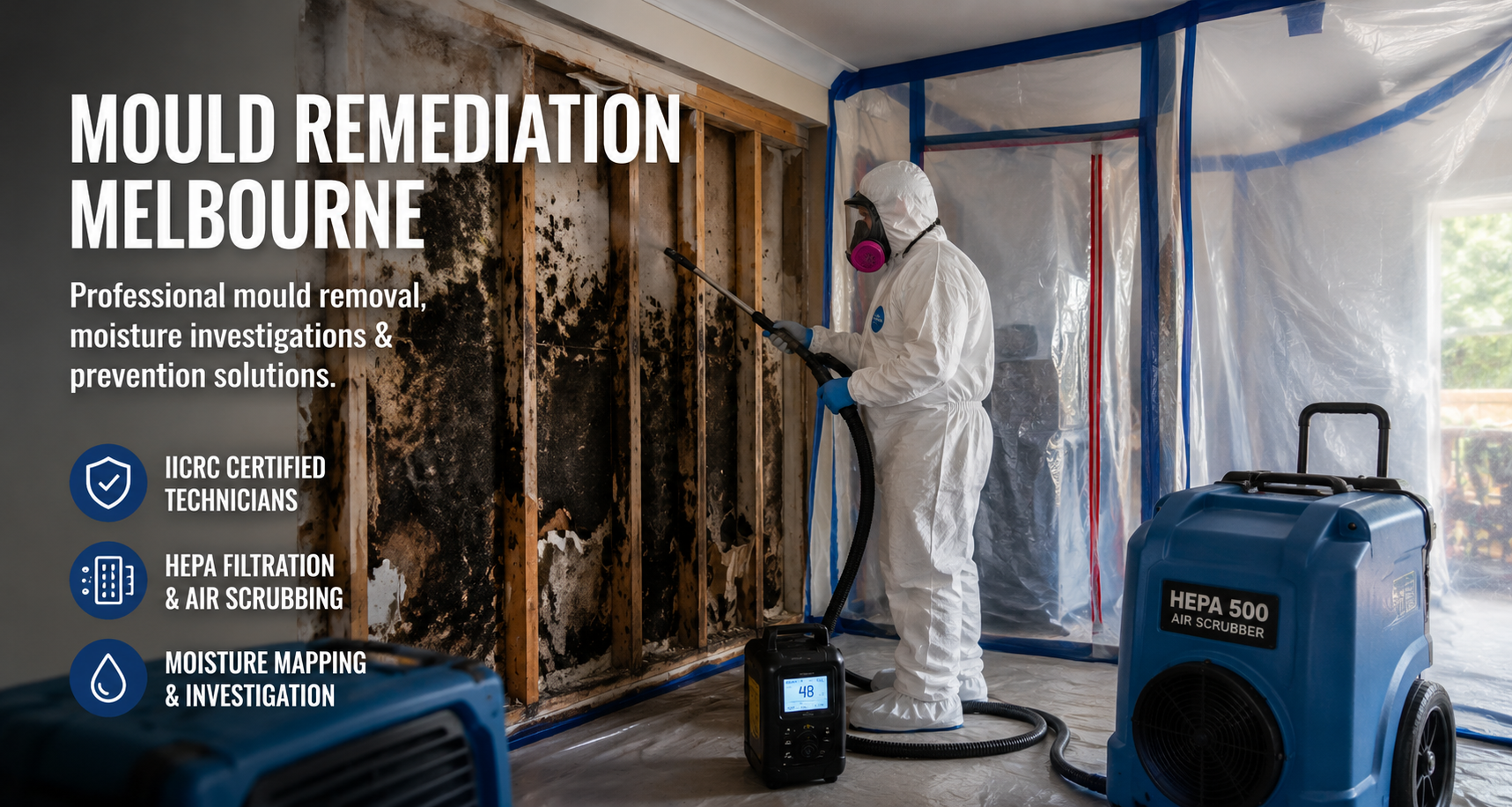
Professional mould removal and controlled remediation work in Melbourne
Work-area controls help limit the spread of mould during cleaning and material removal.

Professional Mould Remediation Across Melbourne

Mould can grow when materials stay damp or indoor air holds too much moisture. Common causes include:

  • Leaking pipes, roofs or external walls
  • Failed waterproofing in bathrooms and showers
  • Flooding or stormwater entering the building
  • Condensation on cold surfaces
  • Poor airflow under the floor
  • Bathroom or kitchen fans that do not remove enough moist air

A surface treatment may not reach mould inside materials or moisture hidden behind them.

We assess the cause, affected materials and access. We also consider the people using the property and how to protect nearby rooms and contents.

When to Arrange a Mould Assessment

  • Mould is visible or keeps returning.
  • A musty or damp smell does not go away.
  • Walls or ceilings have water stains, bubbling paint or damaged plaster.
  • Carpet, timber, cupboards or stored items feel damp.
  • Condensation keeps forming on windows, walls or ceilings.
  • The property has had a leak, flood or stormwater damage.
  • You suspect moisture under floors or inside walls.
  • You need a report for a rental, strata, insurance or workplace matter.

For health concerns, speak with a healthcare professional. ARS assesses the property. We do not diagnose illness or determine what caused symptoms.

Our Melbourne Mould Removal Process

  1. Discuss the problem: Review the affected areas, past leaks, repairs and your needs.
  2. Inspect accessible areas: Record visible mould, damage, odours and moisture readings. Check relevant airflow conditions.
  3. Address the source: Check whether active water entry has stopped. Recommend a suitable licensed trade where repairs are needed.
  4. Plan the work: Define the work areas, materials, access controls and exclusions. Agree on how the results will be checked.
  5. Prepare the area: Protect nearby surfaces and set up suitable barriers and access controls.
  6. Clean or remove materials: Clean items that can be kept. Remove affected materials where needed.
  7. Complete detailed cleaning: Remove remaining dust and residues from the work area.
  8. Check drying progress: Where drying is included, monitor moisture against the agreed targets.
  9. Review and hand over: Record the work completed, access limits and any further repairs or checks needed.

Australia has a dedicated mould remediation standard, AS-IICRC S520:2025. Read our Australian mould remediation standards guide for the distinction between standards, project requirements and legal compliance.

Containment and HEPA Air Filtration

Containment helps limit the spread of dust and mould during work. The controls depend on the size, location and conditions of the job.

These may include barriers, restricted access, protected walkways and HEPA-filtered air equipment. Where needed, equipment helps control air pressure within the work area.

The plan also considers people, pets, nearby rooms, shared corridors and heating or cooling systems. Fire safety and emergency access must be maintained.

Barriers do not guarantee that no particles will escape. We check the controls during the work and adjust them where needed.

Cleaning or Removing Affected Materials

Hard surfaces can often be cleaned if they are sound and easy to reach. Materials that absorb moisture need closer assessment.

Plasterboard, insulation, ceiling tiles and carpet underlay may need removal. This depends on their condition and whether the mould can be properly addressed.

We consider the material, damage, access and value of the item. We also discuss your needs and how the result can be checked.

Moisture investigation supporting a Melbourne mould remediation scope
Moisture assessment helps define affected materials and practical remediation boundaries.
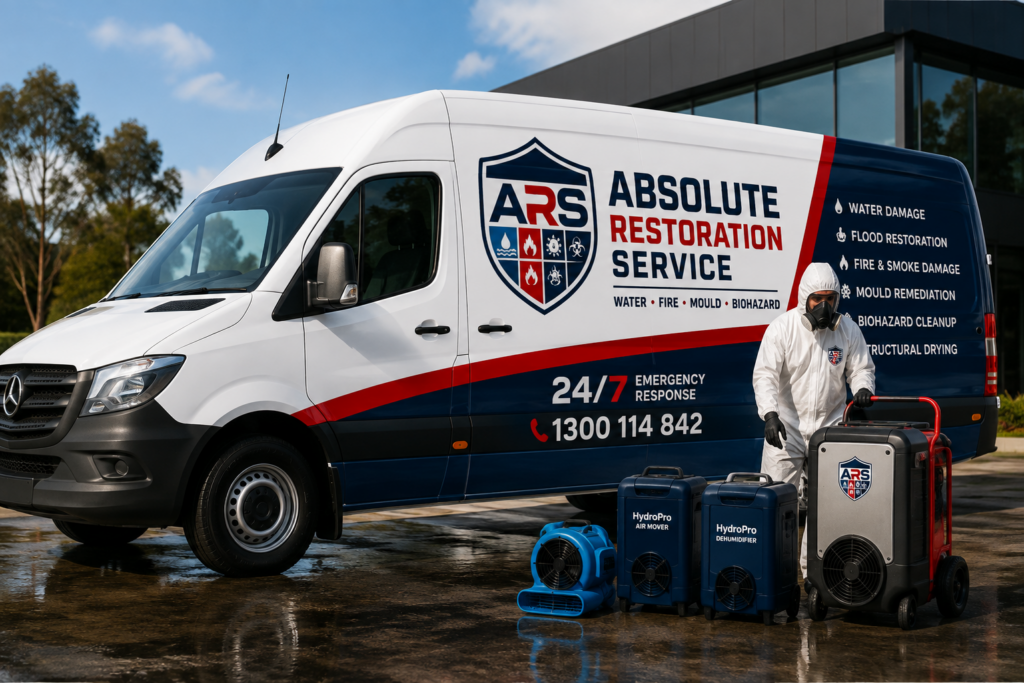
Absolute Restoration Service corporate van supporting mould removal across Melbourne
ARS supports residential, rental, strata and commercial properties across Melbourne.

Finding and Fixing Moisture Problems

Mould can return if materials stay damp. Finding and fixing the moisture source is an important part of the work.

ARS checks accessible areas using moisture meters, visual checks and thermal imaging where useful.

A thermal camera shows changes in surface temperature. It cannot see through walls or directly detect mould or water. Unusual patterns need further checks.

We may recommend more moisture readings, approved access to hidden areas or assessment by a suitable trade. Leaks and building faults may need repair by licensed contractors.

Drying and Moisture Monitoring

Where drying is included, dehumidifiers and air movers help dry wet materials. We monitor moisture readings, adjust equipment and compare progress with agreed targets. Equipment use is planned around containment, cleaning and material removal.

Mould Removal for Different Properties

Homes and Apartments

We assess mould in bedrooms, bathrooms, kitchens, laundries and wardrobes. The work may also include accessible subfloors, roof spaces and areas affected by leaks.

We agree on access and arrangements for people using the property before work starts.

Rental and Strata Properties

ARS works with renters, owners, property managers and strata representatives who have authority to arrange the work.

In strata buildings, water may travel between units, shared areas or services. We record the conditions we can assess. Questions about ownership, responsibility or insurance cover need separate advice.

Commercial Properties and Workplaces

We can plan work in stages or arrange access outside normal hours. The plan may include protecting stock, equipment and nearby work areas.

We also coordinate with building managers, occupants and other trades. See our commercial mould removal Melbourne service.

Mould Sampling and Independent Checks

Not every mould job needs sampling. A test should answer a clear question.

Before sampling, the plan should explain what will be tested, where samples will be taken and how the results will be used. It should also explain the limits of the test.

A small number of samples cannot describe every room, hidden space or surface.

If an independent check is required after remediation, a suitably qualified person separate from the remediation contractor should complete it. The checks and completion targets should be agreed before work starts.

Understanding the Scope of Work

Your scope explains which areas and materials are included. It also sets out access limits, exclusions and how the completed work will be reviewed.

Hidden spaces, retained contents and faults outside the scope may need further assessment. We seek approval before opening walls, floors or other building parts.

ARS provides property restoration and mould remediation. We do not diagnose illness, give medical or legal advice, or certify building and plumbing faults.

The work does not aim to remove every naturally occurring mould spore. It focuses on the affected areas and the agreed remediation goals.

Related Mould and Moisture Services

Request Mould Removal in Melbourne

Call 1300 114 842 or contact Absolute Restoration Service online.

Tell us the property type, affected rooms and any known leaks. Let us know whether repairs are complete and if there are access or insurer requirements.
Mould Removal Information and Local Services

Learn more about identifying and treating indoor mould in our complete Melbourne mould removal guide, including common causes, health considerations and the professional remediation process.

Property owners can also review the benefits of professional mould remediation and our guidance about tile and grout mould removal.

Local services are available through our Richmond mould removal team and Thomastown mould removal service.

Mould Removal Melbourne FAQs

Find answers about mould inspections, moisture checks, removal methods and how long the work may take. We also explain why mould can return.

The right approach depends on your property, the affected materials and the source of moisture.

What does professional mould removal include?

The work may include moisture checks, barriers, HEPA air filtration, cleaning and removal of materials that cannot be restored. We agree on the affected areas, work controls and completion checks before starting.

Can mould be removed permanently?

Mould can return if damp conditions remain or recur. Cleaning or removal needs to be paired with leak repairs, drying and suitable airflow. No treatment can guarantee that mould will never return.

Do you provide mould removal for apartments, rentals and strata properties?

Yes. We work with authorised owners, renters, property managers and strata representatives. Access to neighbouring units, shared services or common areas may need additional approval.

Is mould testing required before removal?

Not always. Testing should answer a useful question. Visible mould and clear moisture damage may provide enough information to plan work. We explain any proposed sampling and its limits.

Can ARS repair the leak causing the mould?

ARS provides moisture assessment, drying and mould remediation. Plumbing, roof, waterproofing, drainage, electrical or structural repairs may need the appropriate licensed or qualified trade.

How long does mould remediation take?

Timing depends on the affected materials, access, repairs, drying and completion checks. We discuss the likely stages after assessment. Hidden damage or repair delays can extend the schedule.