Professional mould remediation helps address the affected materials and the moisture problem. It can provide a clear work plan, controls to limit dust spread and records of what was done.
This Melbourne guide explains five practical benefits and the questions to ask before authorising work.
Why Professional Mould Remediation Matters
Mould grows where surfaces stay damp. Cleaning a patch may leave a leak, condensation or wet materials unresolved. The moisture source needs attention too.
An assessment links visible growth with the building’s water history. It helps define the affected areas, work controls and completion checks.
1. Investigation of Moisture and Affected Areas
We ask when the problem began and review leaks, repairs and recurring growth. We inspect accessible materials and take moisture readings where needed.
Thermal imaging shows surface temperature patterns. It does not see through walls or directly measure moisture or mould. We compare the images with readings, visible signs and the building history.
An accessible inspection cannot check every hidden cavity. Further access may need approval and a plumber, roofer, builder or other qualified specialist.
2. Controlled Disturbance and Work-Area Management
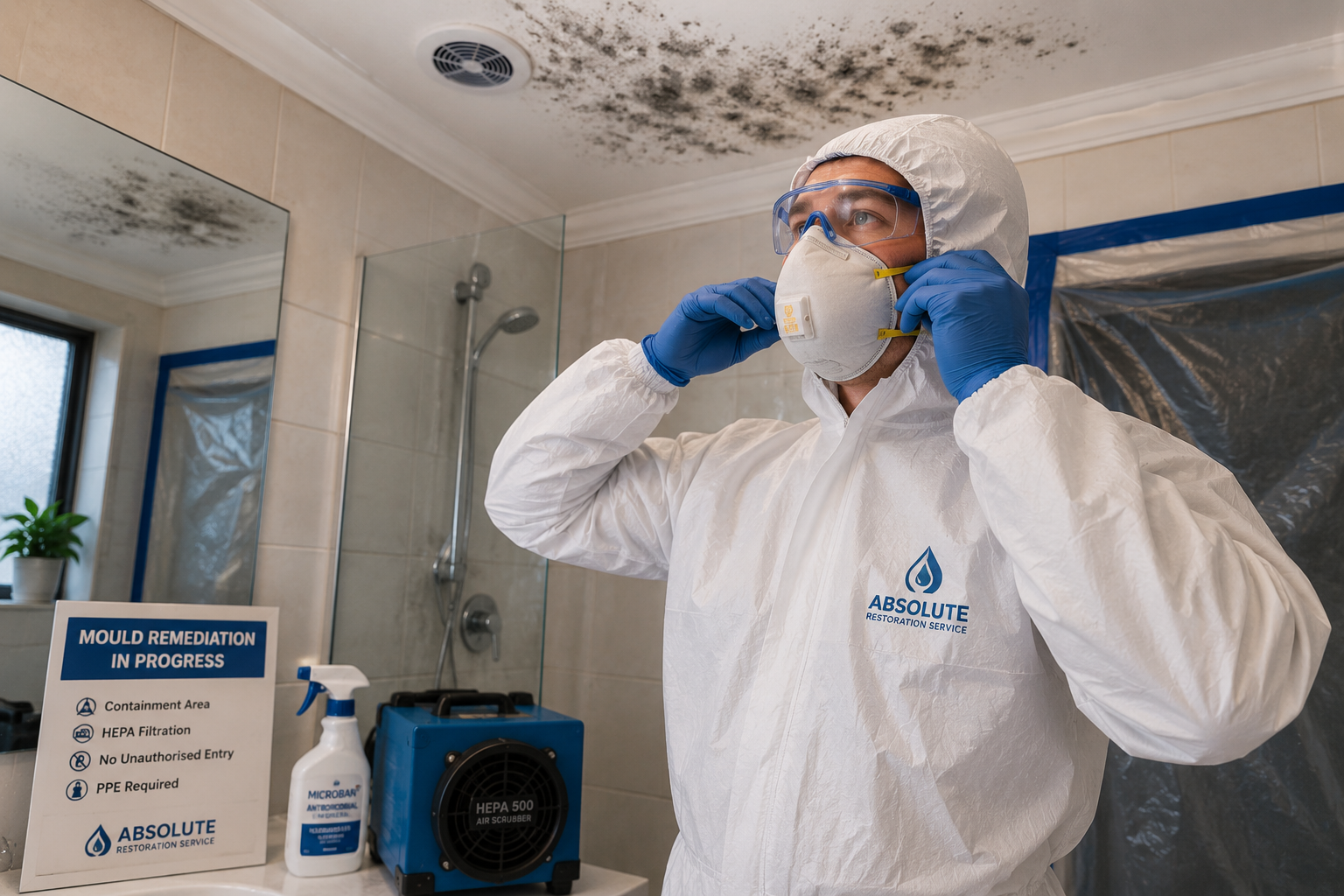
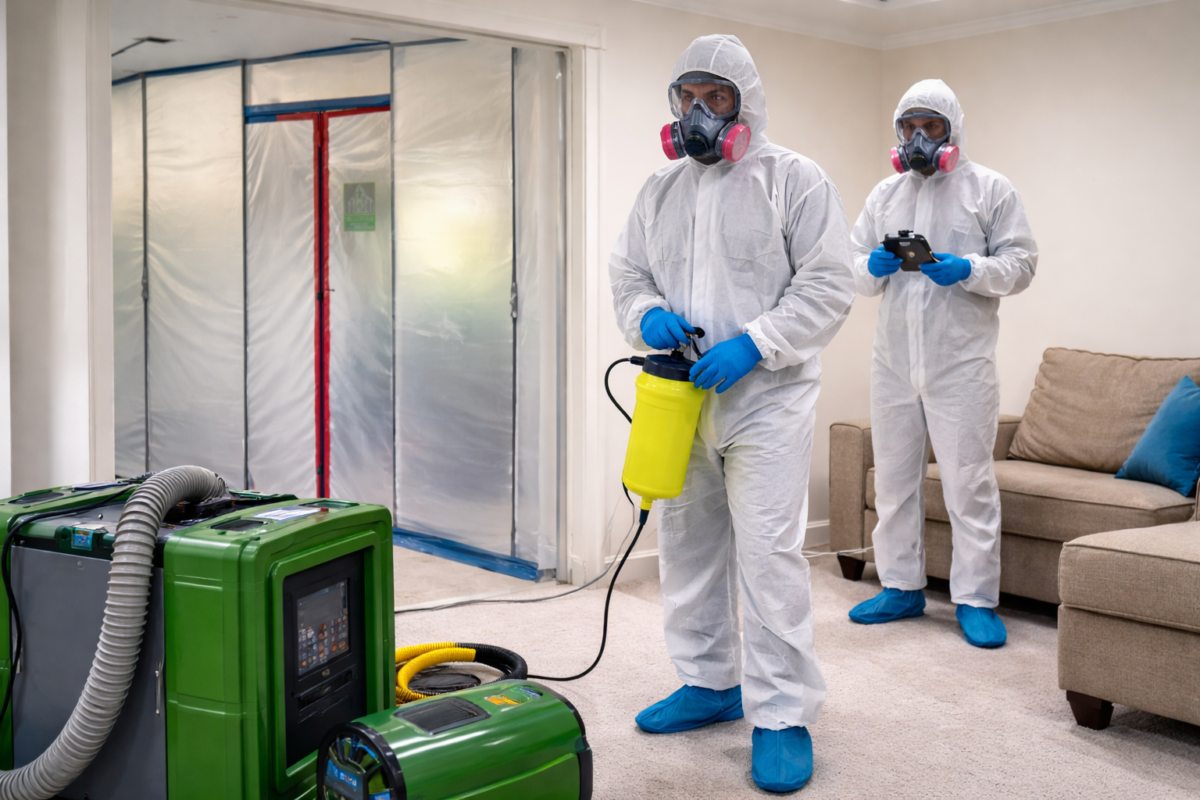
Removing damaged plasterboard, insulation or carpet can release dust and debris. Barriers, restricted access and HEPA-filtered equipment may help limit spread during the work.
Controls depend on the materials, access, occupants and tasks. The plan also needs to address wiring, weak building materials, suspected asbestos, sewage and other site hazards.

3. Material-Specific Remediation Decisions
Some sound surfaces can be cleaned. Damaged plasterboard, insulation and underlay may need removal if they cannot be effectively cleaned and dried.
We consider the material, moisture exposure, condition and access. The scope explains what will be kept, cleaned, dried or removed before work starts.
4. Professional Equipment and Detailed Cleaning
Different equipment has different roles. HEPA vacuums and air scrubbers help manage particles. Dehumidifiers and air movers support drying. Moisture meters help track progress.
Air filtration supports particle control alongside cleaning and removal where needed. It does not repair a leak. During drying, we monitor moisture readings and adjust equipment against agreed targets.
5. Documentation, Handover and Practical Prevention
Work records can show initial conditions, authorised removal, cleaning and drying progress. Handover should explain outstanding repairs, reinstatement and any separate verification needs.
Prevention advice needs to match the moisture source. Condensation may need better moisture management or airflow. Plumbing and roof leaks need the appropriate trade. Wet building materials may need monitored drying.
A Typical Professional Remediation Process
- Initial review: Record the moisture history, visible conditions, access and known hazards.
- Investigation: Assess accessible materials and define the affected area.
- Source coordination: Confirm that leaks or other active sources are addressed by the appropriate party.
- Work-area controls: Establish containment, restricted access and HEPA air management where required.
- Material work: Remove authorised unsalvageable materials and clean retained surfaces.
- Drying and monitoring: Use suitable equipment and monitor accessible materials.
- Handover: Document the completed scope and any outstanding repairs or verification.
What Professional Remediation Cannot Guarantee
Mould can return if dampness remains, repairs are incomplete or a new leak occurs. Hidden or untreated areas may also need further work. No treatment can guarantee that mould will never return.
Building remediation does not diagnose illness or decide a person’s medical fitness to occupy a property. Seek healthcare advice for health concerns.
Questions to Ask a Mould Remediation Contractor
- How will the moisture source and affected area be investigated?
- Which materials are proposed for cleaning, drying or removal, and why?
- What containment, access and HEPA air controls are included?
- Who is responsible for plumbing, roofing, building or asbestos work?
- How will drying and completed work be documented?
- Is independent post-remediation verification appropriate?
- Which items are excluded from the quoted scope?
Clear answers help you compare the work included in each quote and understand any separate repairs or independent checks.
Professional Mould Remediation in Melbourne
Absolute Restoration Service provides mould removal in Melbourne, moisture investigation and water-damage restoration. Our IICRC-trained technicians plan the work around the property, materials and findings.
Call 1300 114 842 or contact ARS to discuss the next step.
The initial phone consultation is free. Onsite inspections, testing and reports may involve quoted fees, which are discussed before booking.
Frequently Asked Questions
What are the main benefits of professional mould remediation?
The main benefits are moisture investigation, controlled work areas, suitable cleaning or removal methods, equipment matched to the job and clear work records.
Can I remove mould myself?
A small accessible area on a sound washable surface may be suitable for careful cleaning. Extensive, recurring or concealed growth may require professional assessment.
Will mould return after professional remediation?
It can return if moisture persists, repairs are incomplete, new water damage occurs or areas outside the scope remain affected.
Does thermal imaging detect hidden mould?
No. Thermal imaging shows surface temperature patterns. These guide further checks using moisture readings and site observations.
Do all mould-affected materials need removal?
No. Some sound surfaces can be cleaned. Damaged materials that cannot be effectively cleaned may need controlled removal. The scope should explain each decision.
How long does professional mould remediation take?
Timing depends on the affected areas, materials, access, repairs and drying. We discuss the likely stages after assessment. Hidden damage or repair delays may extend the work.