BUILDING MOISTURE AND INDOOR ENVIRONMENT GUIDE
Mould grows when building materials stay damp under suitable conditions. Spores are common in the environment, but they need moisture and a suitable surface to grow. A burst pipe may make the source obvious. Condensation, damp subfloors and water beneath flooring can be harder to spot.
Finding how water enters, spreads and stays in a building helps address the cause. Repeatedly cleaning visible spots may leave that cause untouched. This guide explains common moisture sources, the role of ventilation and tools used to investigate dampness.
For Melbourne moisture investigation or mould remediation, call 1300 114 842 or use the ARS contact form.

The Conditions That Support Mould Growth
Four broad factors influence indoor growth:
- Moisture: liquid water, damp materials, high surface humidity or condensation;
- Material: paper-faced plasterboard, timber, carpet backing, dust and other organic residues;
- Temperature: conditions that support growth and affect evaporation or condensation; and
- Time: the period materials remain damp before source control and drying.
Moisture is usually the factor we can change most effectively. Removing visible mould without fixing dampness leaves conditions that can support new growth.
Bulk Water: Leaks, Flooding and Water Entry
Water can enter through leaking pipes, overflows, faulty appliances, roofs, balconies or windows. Storms, groundwater and poor drainage can also cause water entry. It can spread beyond the visible stain. Joints, wall spaces, insulation, floors and absorbent materials can carry or hold water.
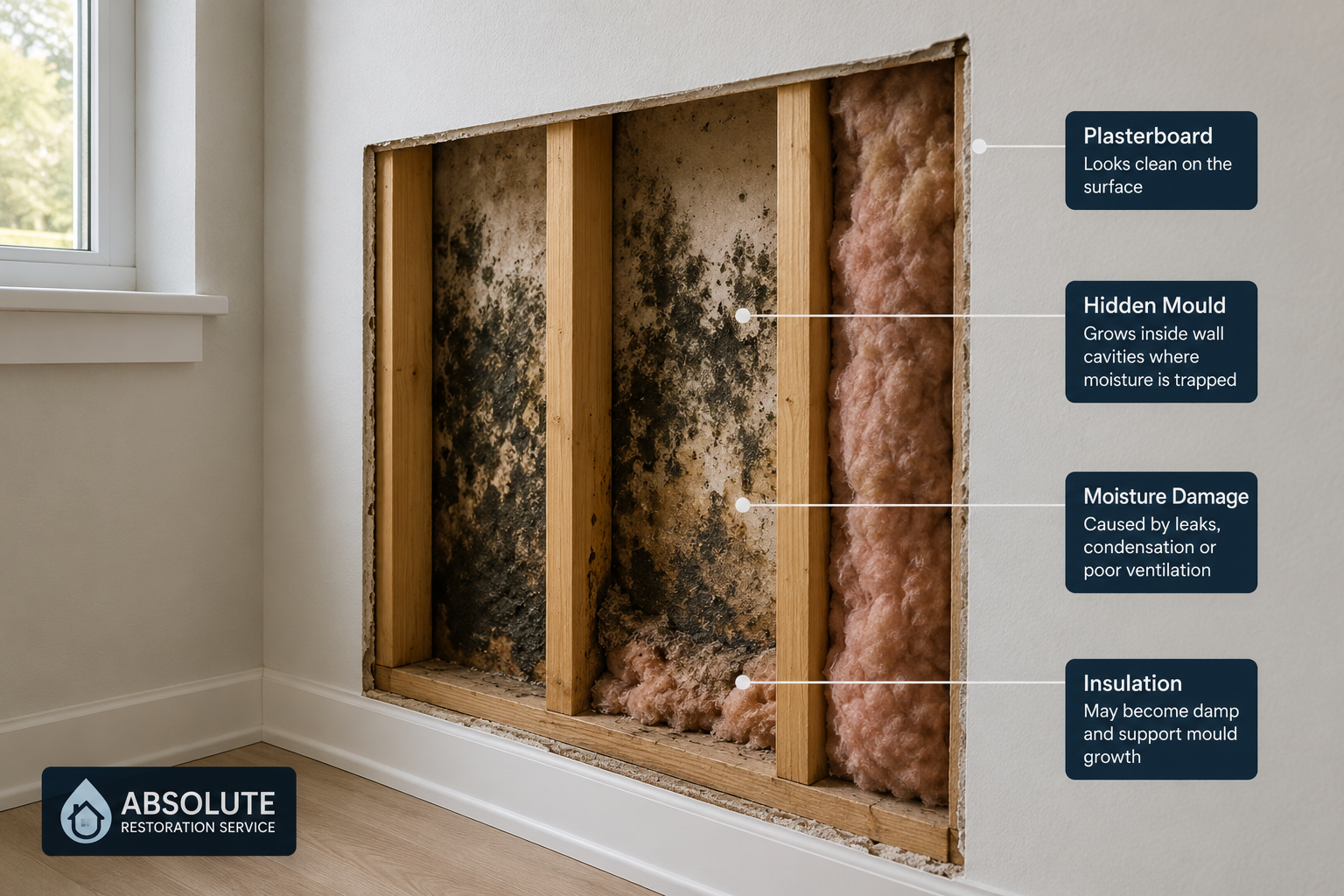
A dry surface does not prove that lower layers are dry. Moisture checks and controlled drying may be needed before new finishes are fitted.
Condensation and Surface Temperature
The amount of water vapour air can hold depends on temperature. Near a cold surface, moist indoor air cools. Humidity close to that surface can rise, and water droplets may form. This is condensation. Common places include windows, outer walls, ceiling corners and metal frames. Poorly insulated joints can also be affected.
The dew point is the temperature at which air becomes saturated with water vapour. It depends on the measured temperature and humidity. As these change, the chance of condensation also changes.
Thermal Bridging and Insulation
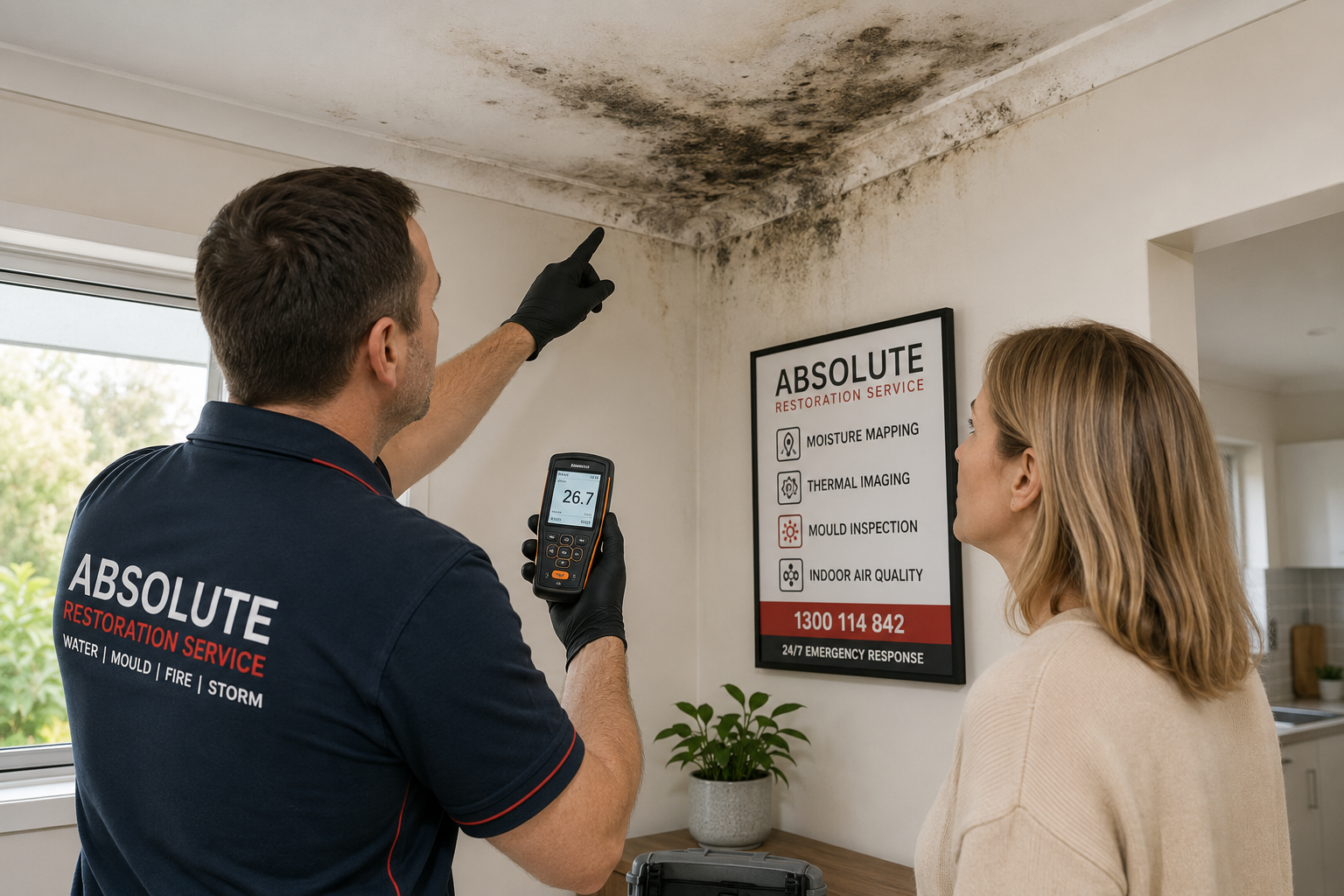
A thermal bridge is a part of a building that lets heat pass through more easily than nearby parts. Frames, lintels, slab edges and poorly insulated joints can create cold spots indoors. When indoor moisture is high, these surfaces can become damp and support mould growth.
Thermal bridging is one possible cause. Similar stains can come from leaks, missing insulation, air leaks or other building faults. Checks should consider the stain pattern, past weather, moisture readings and how the building is made.
Indoor Moisture Generation
Showers, cooking, clothes drying, unflued heaters and daily living release water vapour indoors. Its effect depends on room size, airflow, temperature and outdoor conditions. How long the moisture stays also matters.
Daily activities can affect humidity. But they do not prove who is responsible for dampness. The building, maintenance history and signs of water entry also need review.
Ventilation: Important but Not a Universal Cure
Well-designed ventilation can remove indoor moisture and reduce condensation when used correctly. Bathroom and kitchen fans need to discharge to the right place. They also need a clear air path and enough running time for the room.
Opening windows may help when outdoor conditions suit. It may help less during cold, wet or very humid weather. Ventilation cannot fix leaking pipes, failed waterproofing, roof leaks or groundwater. Wet absorbent materials may still need drying or other work.
Ground Moisture and Subfloor Conditions
Damp soil, poor drains, blocked vents and groundwater can add moisture beneath raised floors. Air and smells can pass into rooms through gaps and service openings. Subfloor ventilation may help. It must be considered alongside drainage, moisture sources and any existing mould.
For detailed guidance, see our subfloor mould remediation article.
Hidden Moisture Behind Walls and Beneath Floors
Dampness can hide in insulation, wall spaces, floating floors and underlay. Cabinets and gaps behind skirting boards can also conceal water. Moisture may remain when exposed surfaces look dry. Floor and wall finishes can slow drying.
Moisture Investigation Tools and Their Limits
Moisture meters
Moisture meters help compare materials that can be reached and track changes during a job. Results depend on the meter, material and depth. A suitable reference area helps interpret the readings.
Thermal imaging
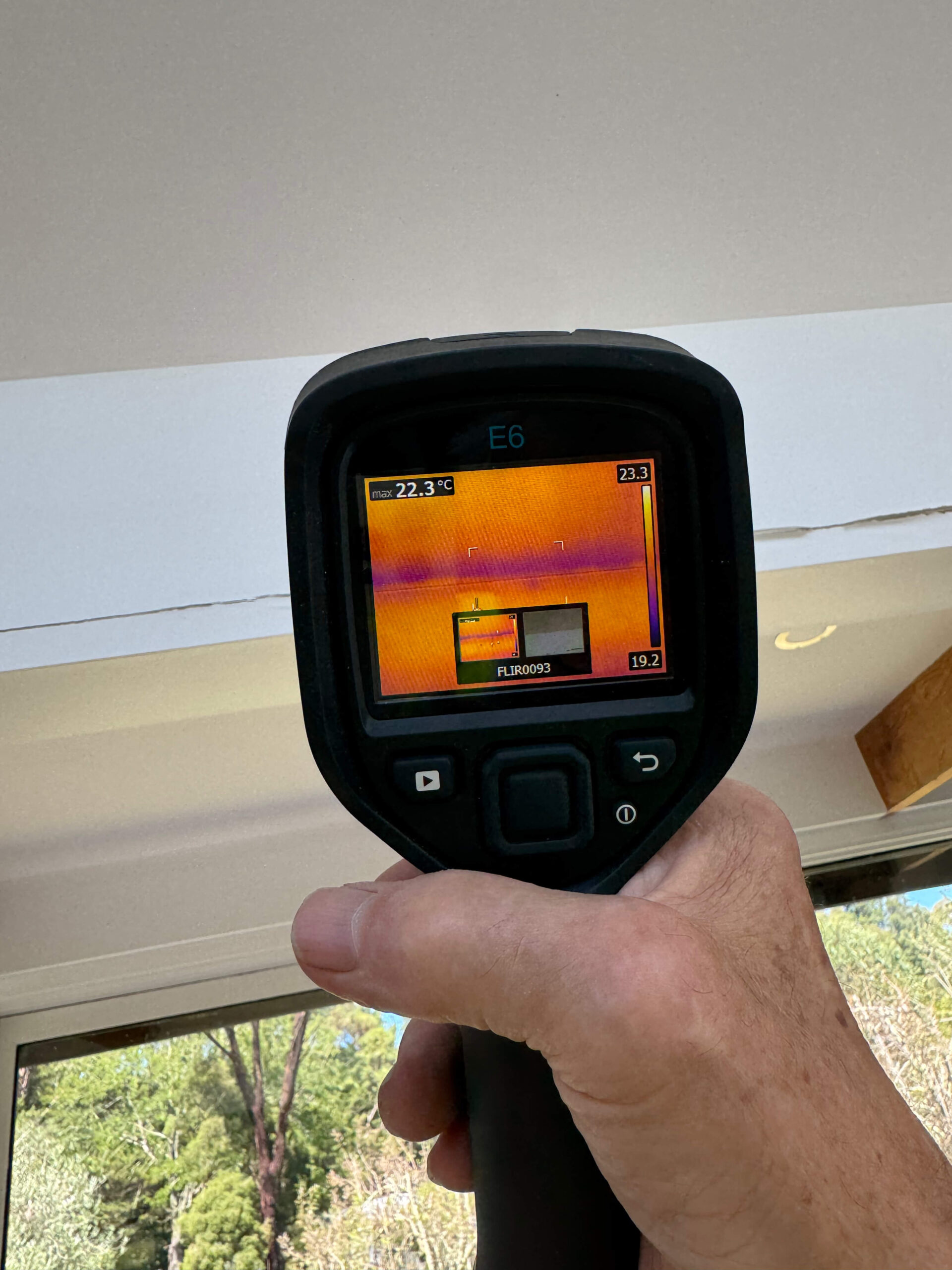
Thermal cameras show patterns in surface temperature. These patterns can guide closer moisture checks. Cameras cannot see through walls, measure moisture directly or identify mould.
Temperature and relative-humidity monitoring
Temperature and humidity readings describe the air at one place and time. Meter location, outdoor weather and room use affect the result. So do heating and cooling. One reading cannot explain the whole building.
Indoor Air Quality: What Mould Observations Mean
Dampness and mould matter to indoor conditions. But one humidity, carbon dioxide or airborne-particle reading cannot prove hidden mould is present. Smells and occupant observations can help guide checks. They cannot identify the source or mould species.
ARS cannot diagnose illness or determine a person’s exposure. Discuss health concerns with a qualified healthcare professional.
When Is Mould Sampling Useful?
Sampling is not always needed when mould is visible and the moisture problem is clear. A test should answer a specific question. The result should help decide the next steps or how to check the completed work.
An independent assessor or laboratory may help with complex, disputed or sensitive projects. Test methods and results must be considered alongside the building conditions.
A Practical Prevention Hierarchy
- Control active sources: Repair plumbing, roofing, drainage and building water entry through the relevant licensed trade.
- Remove accessible water: Extract standing water where safe and appropriate.
- Dry affected materials: Use an assessment-led drying plan for porous and concealed materials.
- Address contaminated material: Remediate affected areas rather than painting over visible growth.
- Manage indoor moisture: Use suitable exhaust ventilation and consider occupancy-generated humidity.
- Reduce cold-surface risk: Investigate insulation, thermal bridging and airflow where condensation recurs.
- Monitor: Watch for recurring staining, odour, dampness and condensation after repairs.
For post-remediation actions, see our mould control Melbourne guide.
When Professional Investigation Is Appropriate
Seek help if mould keeps returning, covers a large area or is hidden. Water damage, affected absorbent materials and difficult access also need professional advice. Immediate electrical, structural, sewage or fire hazards must be dealt with first. Use emergency services or the relevant licensed professional.
Absolute Restoration Service uses IICRC-trained technicians and professional inspection equipment. Our findings cover restoration conditions in areas we can assess. Qualified building practitioners should answer questions about design, structural strength and compliance.
Mould Growth Causes FAQs
What is the main cause of indoor mould growth?
Ongoing moisture is the main condition that allows mould to grow. Sources include leaks, floods, condensation, groundwater and damp materials. Indoor humidity that stays high can also contribute.
Can poor ventilation cause mould?
Poor ventilation can let indoor moisture build up and lead to condensation. It is one possible factor. Active leaks, failed waterproofing and drainage problems need their own investigation.
Why does mould grow on cold exterior walls?
Cold walls cool the air beside them. This can raise surface humidity or cause condensation. Thermal bridges, insulation, airflow and indoor moisture can all play a part.
Does a high humidity reading prove mould is present?
No. A humidity reading describes one place and time. It cannot confirm mould, find its moisture source or show what is happening inside hidden materials.
Can thermal imaging identify mould?
No. Thermal imaging shows surface-temperature patterns that can guide closer moisture checks. It cannot see through walls or identify mould.
What is the best way to prevent mould growth?
Fix moisture sources, dry wet materials promptly and use suitable ventilation. Address condensation and clean up or remove affected materials as appropriate. The right steps depend on the property.
Related ARS Services and Guides
- Moisture investigation Melbourne
- Mould removal Melbourne
- Mould control Melbourne guide
- Water damage restoration Melbourne
Call 1300 114 842 to discuss a Melbourne property assessment.