PUBLIC-HEALTH CONTEXT AND PROPERTY GUIDANCE
Dampness and mould are indoor environmental concerns. The World Health Organization’s guidance on dampness and mould reports links with more breathing symptoms, allergies and asthma. This evidence supports preventing ongoing dampness and mould growth in buildings.
A restoration contractor cannot diagnose illness or determine a person’s exposure. We also cannot prove that a property caused someone’s symptoms. A qualified healthcare professional assesses health concerns. A building assessment checks moisture, affected materials and the work needed.
For Melbourne mould and moisture assistance, call Absolute Restoration Service on 1300 114 842.
What Public-Health Guidance Says
WHO guidance highlights the need to prevent or reduce ongoing dampness and mould growth. This is an important step for public health. Research across groups of people reports links with breathing symptoms, allergies and asthma.
A link found across groups does not prove what caused one person’s symptoms. People respond differently, and symptoms can have many causes. A building contractor cannot make a medical diagnosis.
Possible Symptoms Require Medical Assessment
Seek healthcare advice for breathing problems, allergy symptoms or irritation you think may be linked to a building. A clinician can review your history and consider other causes. These may include other allergens, infections or exposure at work. A doctor decides whether allergy tests are needed and explains the results.
Urgent breathing difficulty, severe allergic reaction or another medical emergency requires immediate medical assistance. In Victoria, people can also use Healthdirect for health information and service guidance.
Who May Need Additional Care?
People with asthma or known allergies may be more sensitive to allergens or irritants. Discuss what this means for you with your healthcare professional. ARS does not make medical decisions about staying in, leaving or returning to a property.
Access decisions may involve several people. These can include the owner, employer, property manager or insurer. A public-health authority or independent environmental assessor may also be involved, depending on the setting.
Visible Mould Is a Building-Moisture Signal
Visible mould shows that conditions have allowed growth. The next step is to find the moisture source and affected materials. Then decide whether cleaning, removal, drying or specialist repairs are needed.
Colour alone cannot reliably identify mould species, toxins or health risks. Labels such as “black mould” and “toxic mould” can be unclear. They do not replace a building investigation or medical advice.
Hidden Mould and Musty Odours
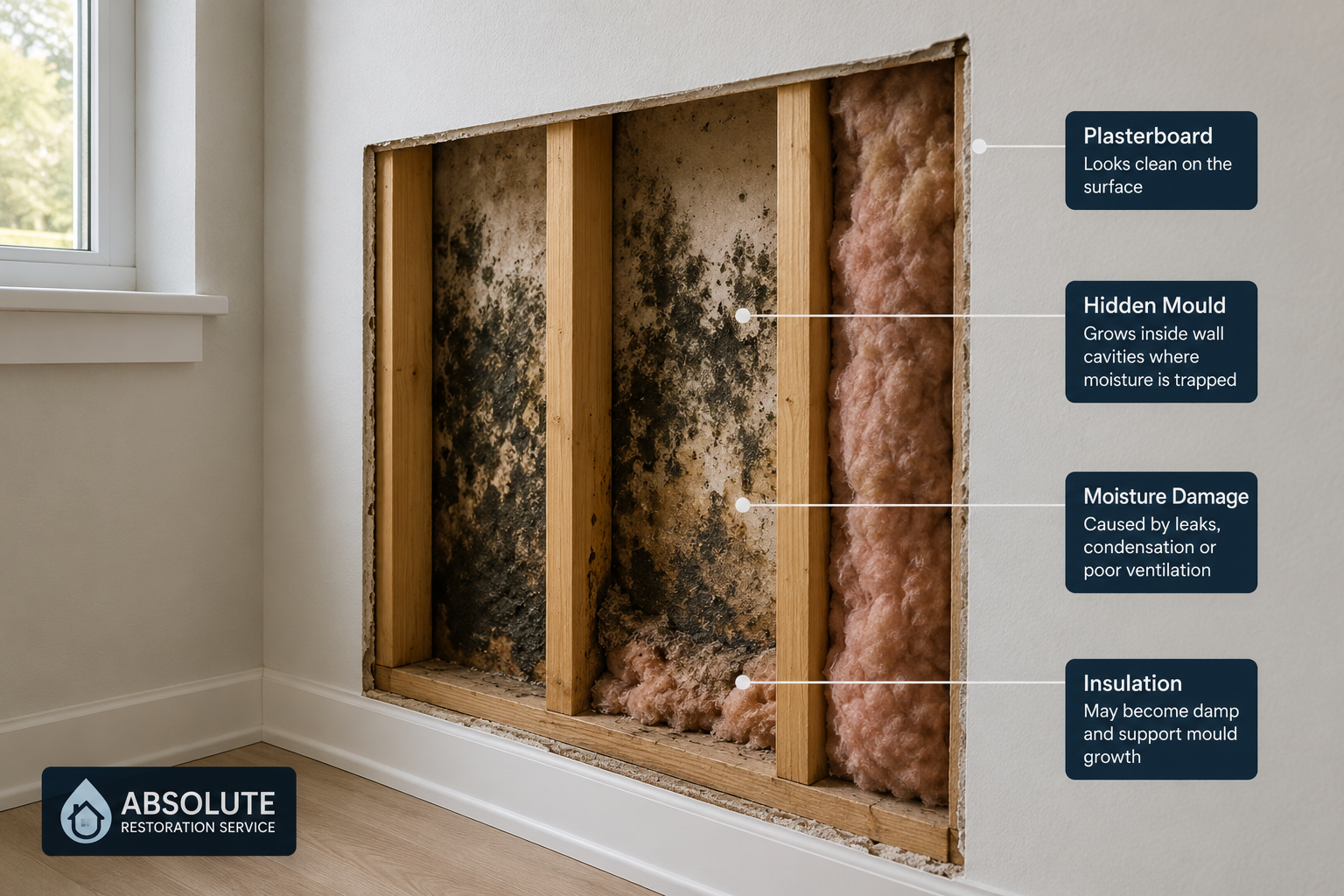
Mould can hide behind walls, under floors, above ceilings and inside cabinets. Damp subfloors can also be affected. A musty smell is a reason to investigate. It cannot tell us where mould is, its type, how far it spreads or its health significance.
Before opening building materials, assess the hazards. These include wiring, plumbing, structural risks, asbestos and the need to control contamination.
How ARS Investigates Property Conditions
- History review: Discuss leaks, flooding, condensation, odours, repairs and recurring growth.
- Accessible inspection: Document visible conditions and likely moisture pathways.
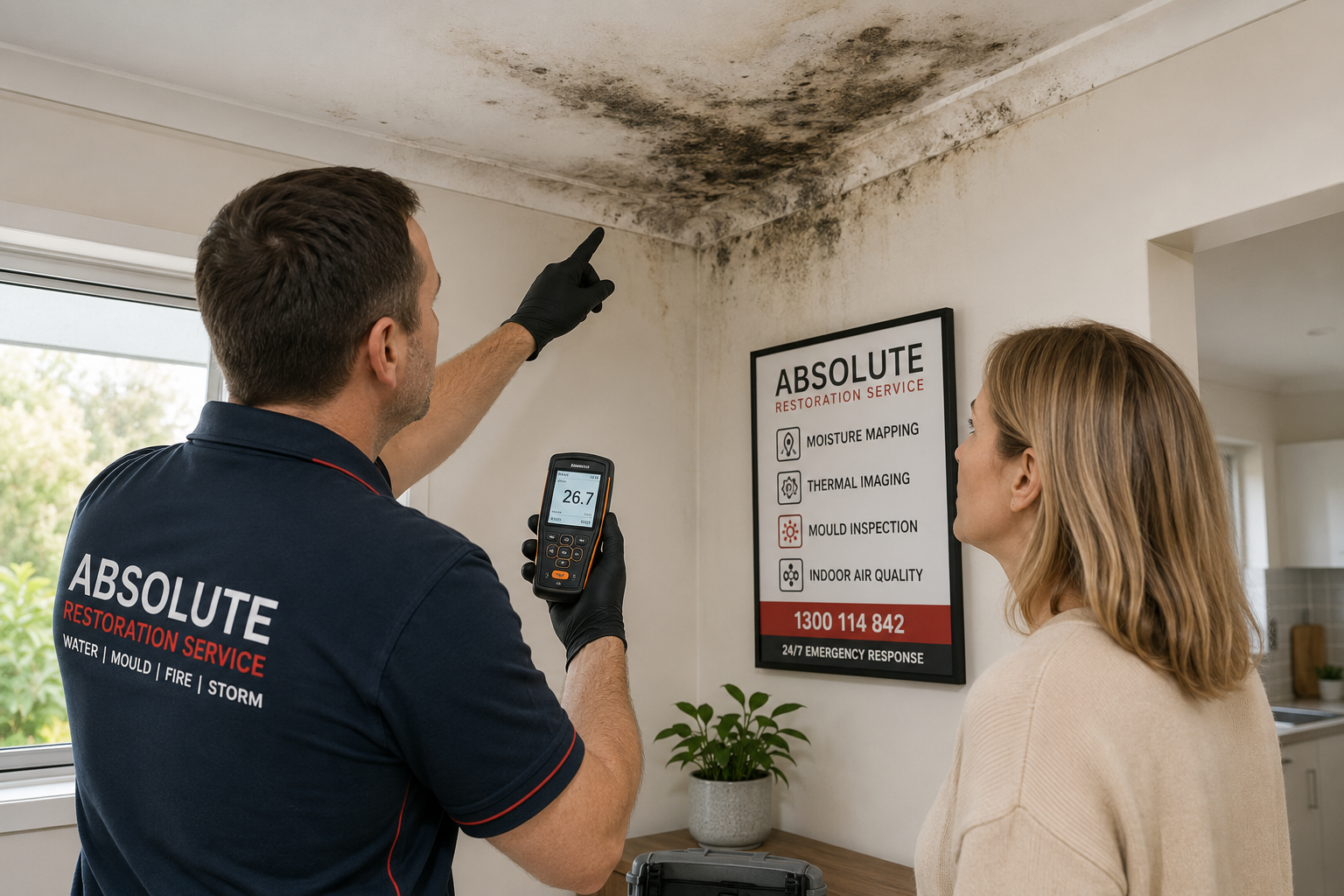
- Moisture assessment: Use suitable meters to compare suspect materials and reference areas.
- Thermal imaging where appropriate: Identify surface-temperature patterns requiring closer investigation.
- Scope development: Recommend source repairs, drying, remediation or specialist assessment.
- Documentation: Record accessible restoration observations and work performed.
Thermal imaging cannot see through walls or identify mould. Moisture readings must be interpreted for the material and meter used. An inspection without opening materials cannot confirm the condition of every hidden space.

Is Mould Testing Necessary?
Sampling is not always needed when mould is visible and its moisture source is clear. A test should answer a specific question. Its result should help decide the work needed or how to check the completed work.
Building samples are not medical tests and cannot diagnose illness. An independent environmental assessor or laboratory may help with complex, disputed or sensitive projects. A healthcare professional should guide medical assessment.
Air Testing and “Safe” Numbers
Mould levels indoors and outdoors vary. Results depend on the sampling method, location, weather and building conditions. The reason for testing also matters. One air sample cannot certify that a property is healthy or free of risk.
If an assessor will check the completed cleanup, agree on the criteria and sampling plan first. These should be set before the contractor’s work is evaluated.
Professional Mould Remediation
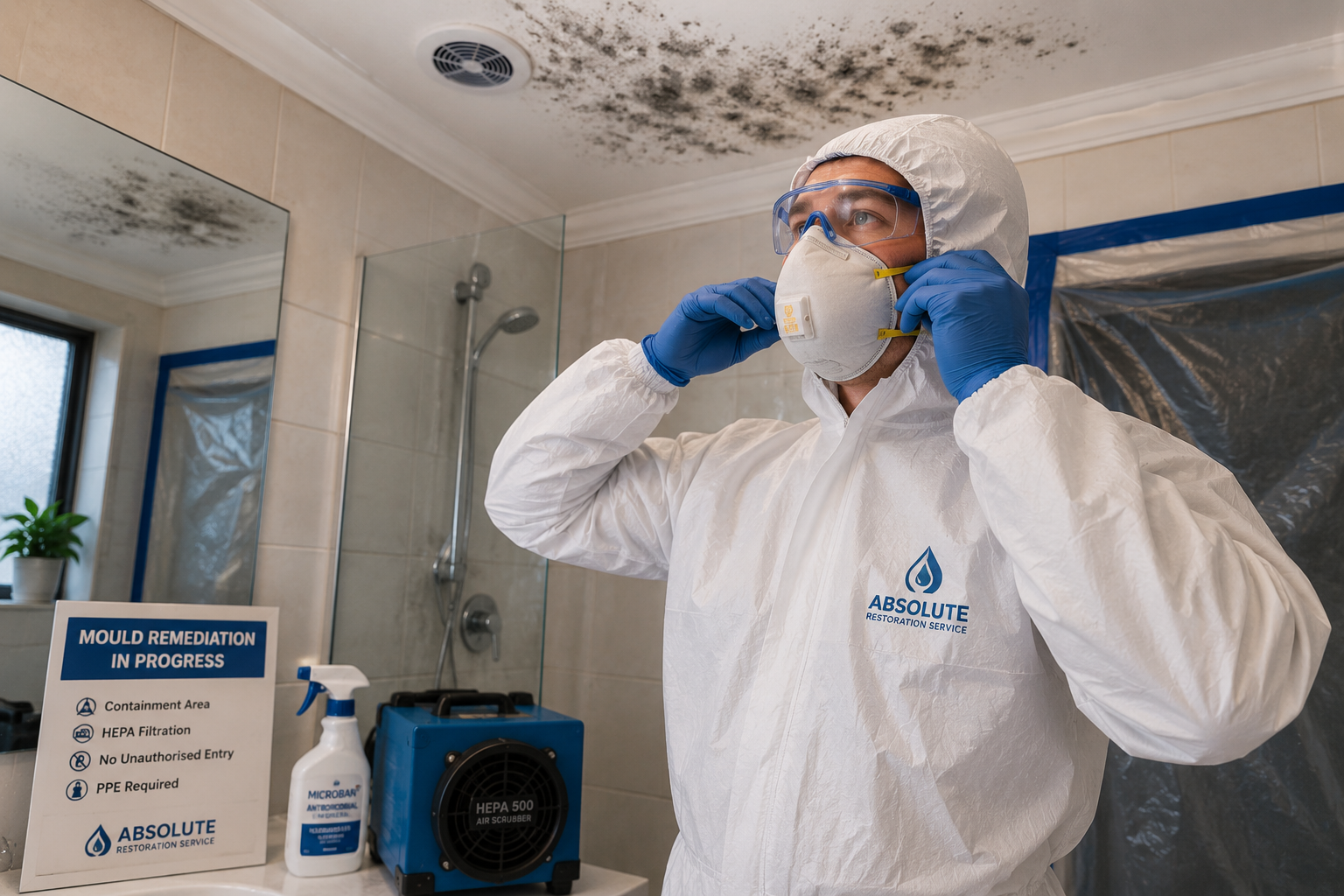
The approved work may include arranging source repairs and limiting access. Barriers, protective equipment and HEPA-filtered air equipment may be needed. Materials that cannot be saved may need removal. Other work can include HEPA vacuuming, surface cleaning and structural drying.
Our IICRC-trained technicians choose controls to suit the affected area. Mould cleanup addresses building conditions. It is not medical treatment, and we cannot promise that symptoms will improve.
Moisture Control Is the Priority
Lasting control depends on fixing the conditions that allowed mould to grow. Plumbing, roof, drain, waterproofing, ventilation or building repairs may be needed. Use licensed trades where required. Cleaning alone is unlikely to last if the moisture source remains active.
Practical measures can include:
- repairing leaks and water entry promptly;
- drying affected materials after a water event;
- using suitable bathroom and kitchen exhaust ventilation;
- investigating recurring condensation and cold surfaces;
- maintaining gutters, drainage and subfloor conditions;
- avoiding installation of finishes over damp substrates; and
- monitoring for recurring odour, staining and dampness.
Rental, Workplace and Strata Properties
Managed properties can involve tenants, owners, employers and property managers. Owners corporations, insurers and public authorities may also be involved. ARS records conditions in areas we can assess and the work completed. We do not decide tenancy duties, fitness for work or legal responsibility. We also do not determine regulatory compliance or insurance cover.
The appropriate healthcare or environmental-health professional should advise on health-based access restrictions. This includes decisions about returning to the property for health reasons.
What ARS Can and Cannot Do
ARS can:
- investigate accessible moisture conditions;
- document visible mould and affected materials;
- develop and complete an authorised remediation scope;
- coordinate practical restoration recommendations; and
- work with independent assessors where verification is required.
ARS cannot:
- diagnose illness or allergy;
- determine individual exposure;
- prove that a property caused symptoms;
- prescribe medical treatment; or
- guarantee a symptom or health outcome after remediation.
When to Seek Help
Seek healthcare advice about symptoms or exposure concerns. Arrange building checks for visible or recurring mould, ongoing dampness, water damage or a musty smell. Suspected hidden moisture also needs investigation. Immediate medical, electrical, structural, sewage or fire hazards need the appropriate emergency service or licensed professional.
For property assistance, call ARS on 1300 114 842 or visit the Mould Removal Melbourne service page.
Mould and Health FAQs
Can dampness and mould affect health?
Public-health guidance reports links between damp or mouldy buildings and breathing symptoms, allergies and asthma. A qualified healthcare professional must assess an individual’s symptoms.
Can mould colour show whether it is dangerous?
No. Colour alone cannot reliably show the species, toxins, exposure or health risk. Building checks should focus on moisture and affected materials.
Can ARS diagnose mould-related illness?
No. ARS checks building conditions in areas we can access and carries out approved mould cleanup. Qualified healthcare professionals diagnose and treat illness.
Is mould testing required when someone has symptoms?
Building samples are not medical tests and are not always needed. A healthcare professional can advise on medical checks. An environmental assessor can decide whether building samples will answer a specific question.
Will mould remediation cure health symptoms?
A cleanup contractor cannot promise a medical outcome. The work addresses identified moisture and contamination within the approved building scope.
What should I do if I am concerned about mould and health?
Seek healthcare advice for symptoms. Arrange building checks for dampness or mould. Urgent breathing difficulty or another medical emergency needs immediate medical assistance.