Mould Remediation Process Melbourne

Mould remediation involves assessing affected areas, cleaning or removing damaged materials, controlling dust and addressing moisture.

Absolute Restoration Service plans mould remediation for Melbourne homes, rentals, strata and commercial buildings. The work depends on the materials, extent of mould, moisture source and access.

For service enquiries, call 1300 114 842 or visit our mould removal Melbourne service page.

The initial phone consultation is free. Onsite inspections, testing and reports may involve quoted fees, which are discussed before booking.

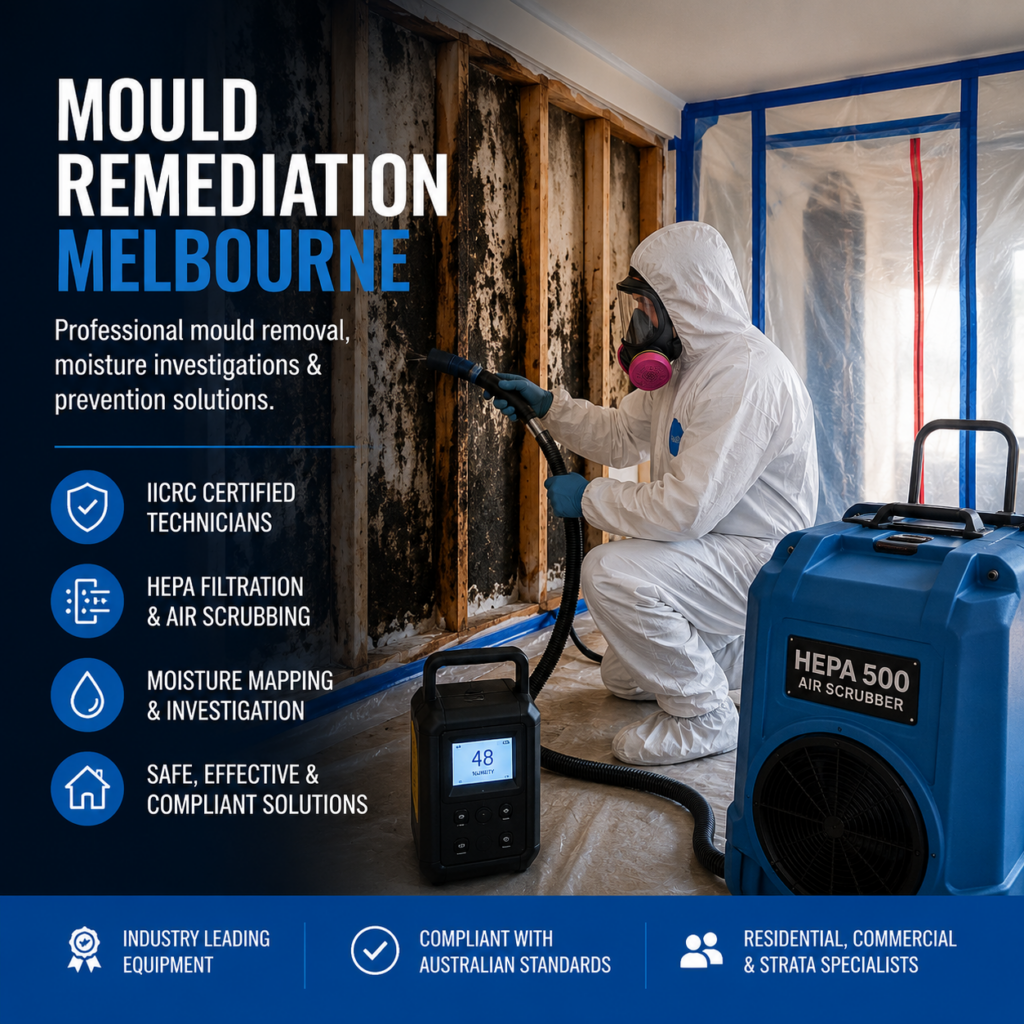
Controlled mould remediation work performed by Absolute Restoration Service in Melbourne
Containment, suitable PPE, source control and detailed cleaning form part of a project-specific remediation plan.

Mould Removal and Mould Remediation

Mould removal often means cleaning or removing affected material. Remediation is the wider work plan. It includes moisture checks, work-area controls, waste handling, detailed cleaning and agreed completion checks.

Mould spores occur naturally, so a building cannot be guaranteed free of every spore. The aim is to address the affected areas and the damp conditions that allowed growth, within the agreed scope.

Why Surface Cleaning May Not Be Enough

Painting over mould or cleaning only the visible surface may leave damp materials or hidden growth behind. Disturbing dry mould without suitable controls can spread dust and particles.

The findings guide the work. A small patch linked to condensation may need a different response from mould after a long-term leak or flood.

Before Remediation Begins

  1. Define the history: review known leaks, flooding, repairs, recurring growth and previous treatment.
  2. Assess accessible conditions: document visible mould, material damage, odours, moisture readings and relevant ventilation conditions.
  3. Address the source: arrange appropriate plumbing, roofing, waterproofing, drainage or building repairs where required.
  4. Set the scope: identify work areas, affected materials, contents, access controls, exclusions and completion criteria.
  5. Plan verification: decide before work whether visual assessment, moisture criteria or independent post-remediation verification will apply.

Typical Mould Remediation Stages

  1. Site preparation: protect unaffected finishes and establish safe access to the work area.
  2. Containment: set up barriers and air-pressure controls where required by the work plan.
  3. Air management: use HEPA-filtered equipment where needed to help capture airborne particles.
  4. Material decisions: determine which materials can be cleaned and which require controlled removal.
  5. Remediation: remove materials that cannot be effectively cleaned, then clean suitable remaining surfaces.
  6. Detailed cleaning: address settled dust and residues within the defined work area.
  7. Drying and monitoring: where drying is included, monitor moisture readings and adjust equipment until agreed targets are met.
  8. Review and handover: document completed work, limitations and any repair or verification requirements.
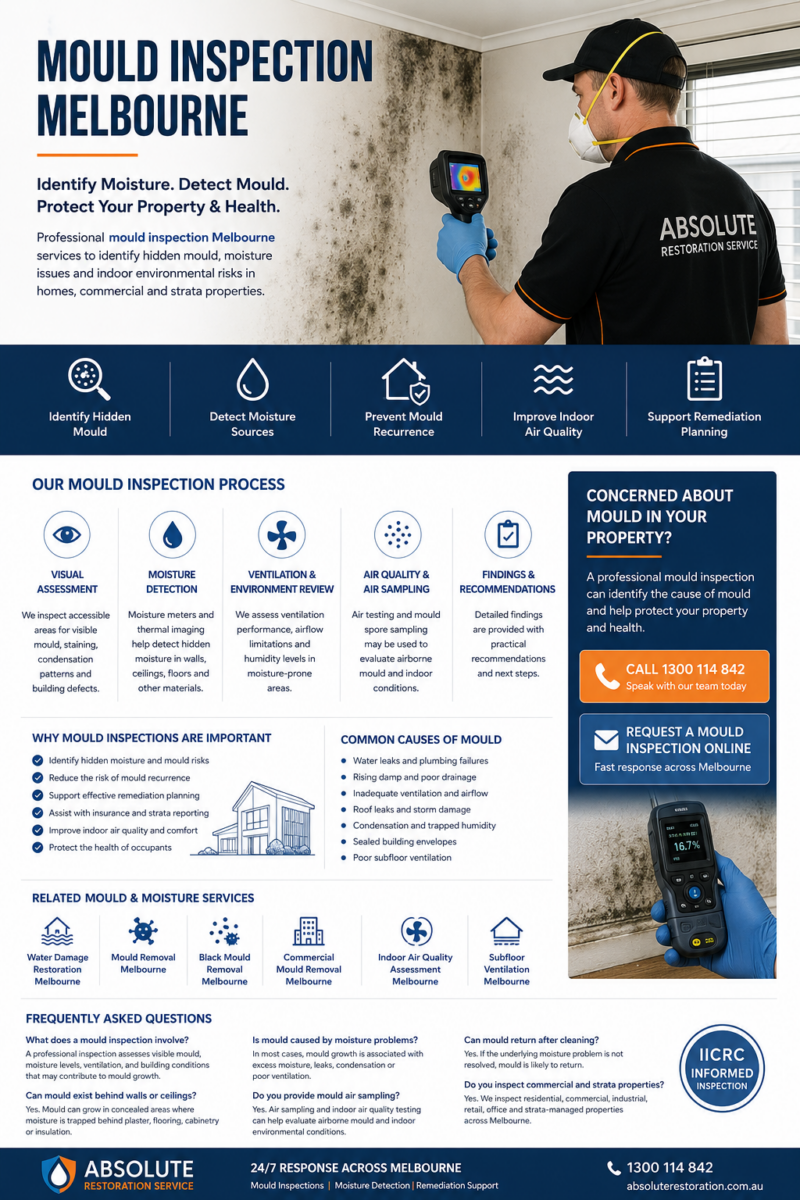
Mould and moisture assessment supporting a Melbourne remediation scope
Assessment helps define affected materials, moisture conditions and practical controls.
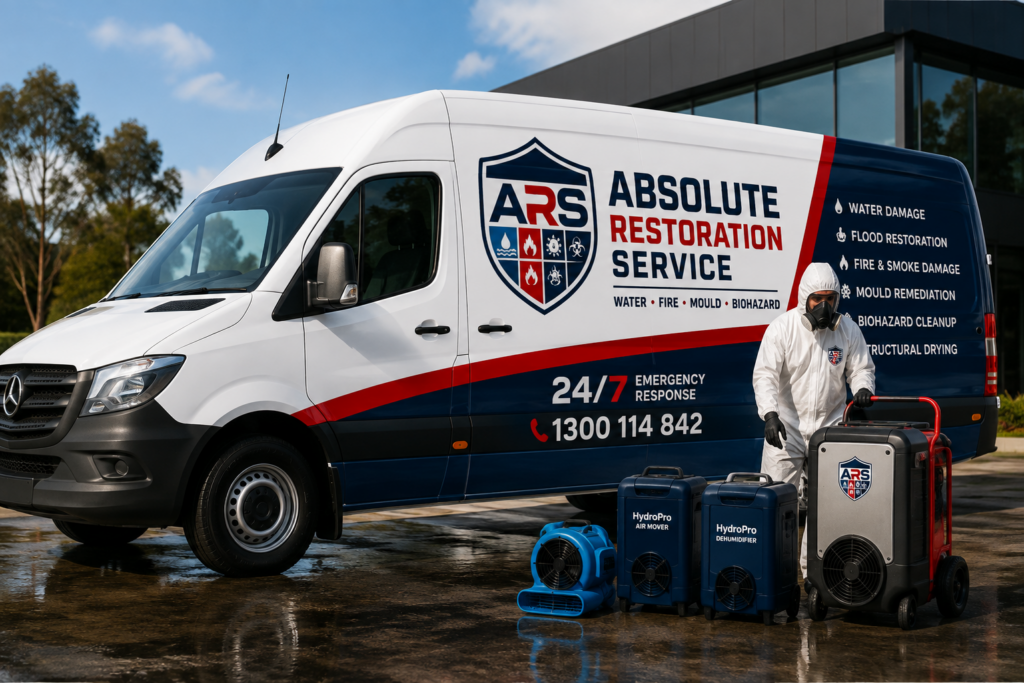
Absolute Restoration Service corporate van supporting mould remediation across Melbourne
ARS supports residential, rental, strata and commercial remediation projects across Melbourne.

Containment and Cross-Contamination Control

We choose containment to suit the work area and risk. It may include barriers, controlled access, floor protection and HEPA-filtered air equipment.

The plan also considers occupants, pets, nearby rooms, shared corridors and air-conditioning. Fire exits and emergency access must remain part of the planning.

Barriers and air controls help limit particle movement. Their condition and performance need checking during the work; they do not guarantee that no particles can move.

Cleaning Versus Removal of Materials

Sound, accessible hard surfaces can often be cleaned. Materials that absorb moisture need closer assessment. Plasterboard, insulation, ceiling tiles or carpet underlay may need removal if they cannot be effectively cleaned.

We consider material condition, access, value and the expected outcome. Cleaning and removal decisions are explained as part of the agreed scope.

Moisture Source Repair and Structural Drying

Mould can return while a leak or other moisture source remains active. ARS provides moisture checks and water damage restoration and structural drying. Repairing the source may need a plumber, roofer, waterproofing contractor or another appropriate specialist.

Where drying is included, dehumidifiers and air movers help dry wet materials. Moisture readings track progress and guide equipment changes against the agreed drying targets.

Thermal imaging shows surface temperature patterns that may need further checking. It does not directly detect mould. We compare the patterns with moisture readings, site observations and building information.

Post-Remediation Review

Agree on completion checks before work starts. We review cleaned surfaces, debris, remaining odours, material condition and moisture readings against the agreed scope.

If independent verification or sampling is required, use an appropriately qualified assessor who is separate from the remediation contractor. Sampling only covers the selected areas and conditions.

Scope Limitations

The scope identifies the areas we can access and treat. Hidden cavities, services, contents and unidentified defects may need further investigation. Opening or removing building materials requires authorisation.

ARS provides building restoration services. Legal, medical and specialist building questions need the relevant qualified adviser. Seek healthcare advice for health concerns.

Related ARS Services

Discuss a Melbourne Mould Remediation Scope

Call 1300 114 842 or contact Absolute Restoration Service online. Tell us the property type, affected areas, known leaks and repair status.
Mould Remediation Melbourne FAQs

What is the difference between mould removal and mould remediation?

Mould removal often means cleaning or removing affected material. Remediation also includes moisture assessment, work-area controls, detailed cleaning and completion checks.

Does mould remediation fix the water leak?

Leak repairs are usually a separate task for the appropriate trade. The work plan should coordinate repairs with drying and cleaning or removal of affected materials.

Can every mould-affected material be cleaned?

No. It depends on the material, damage and access. Some surfaces can be cleaned, while affected materials such as plasterboard or insulation may need controlled removal.

Is air sampling required after remediation?

Not automatically. Agree on completion checks before work starts. Where independent verification or sampling is required, arrange a qualified third party who is separate from the remediation contractor.

How long does mould remediation take?

Timing depends on the affected areas, materials, access, repairs and drying. We discuss a practical schedule after assessment. Further checks or repair delays may extend the work.

Can occupants remain in the property during remediation?

It depends on the work area, required controls and occupants’ circumstances. We discuss access and any need to relocate before work starts.