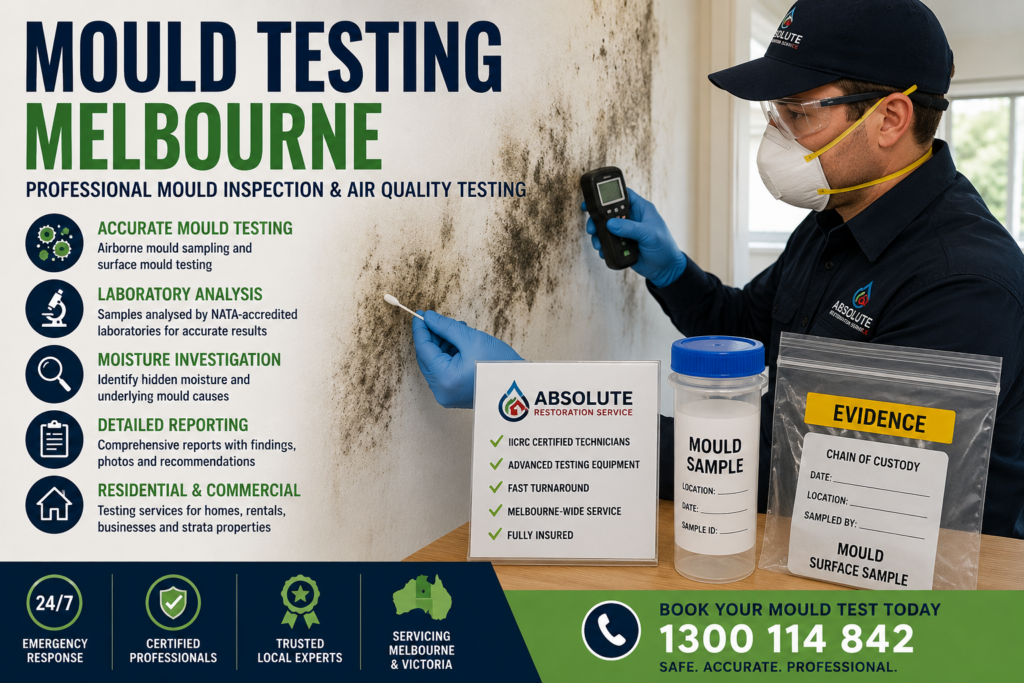
When Mould Testing May Be Useful
Testing may help answer a specific question or provide agreed project records. It should have a clear purpose before samples are collected.
- Suspected contamination is not readily visible
- The type or distribution of growth is relevant to a defined investigation
- A rental, strata, workplace or insurance process requires documented sampling
- Baseline information is required before an agreed project
- A qualified independent party requires post-remediation verification data
- A specific surface, material or area needs targeted assessment
Testing should not delay needed leak repairs, water extraction, drying or management of visible mould.
When Testing May Not Be Necessary
If mould is visible and the moisture source is clear, testing may add little to the work plan. The priorities are to address the moisture and assess which materials need cleaning or removal.
A limited set of samples cannot prove that a whole building is mould-free. Mould spores occur naturally, and conditions can change after collection.
Types of Mould Sampling
Air Sampling
Air sampling collects particles from a measured volume of air. It shows conditions at that location during the collection period.
Weather, airflow, cleaning, occupants and recent disturbance can affect the result. Comparison samples may be needed, depending on the purpose of the test.
Surface Sampling
A tape lift or swab collects material from a selected surface. It can help assess growth in that spot. It does not show how far mould extends behind a wall or elsewhere.
Material Sampling
A small piece of material may be sent to a laboratory for analysis. Permission and safe access are needed before collection. The result applies to the sampled material.
Moisture Assessment Supports Interpretation
We consider visible water damage, moisture readings, humidity, leak history and airflow. These findings help explain the sample results and any further checks needed.
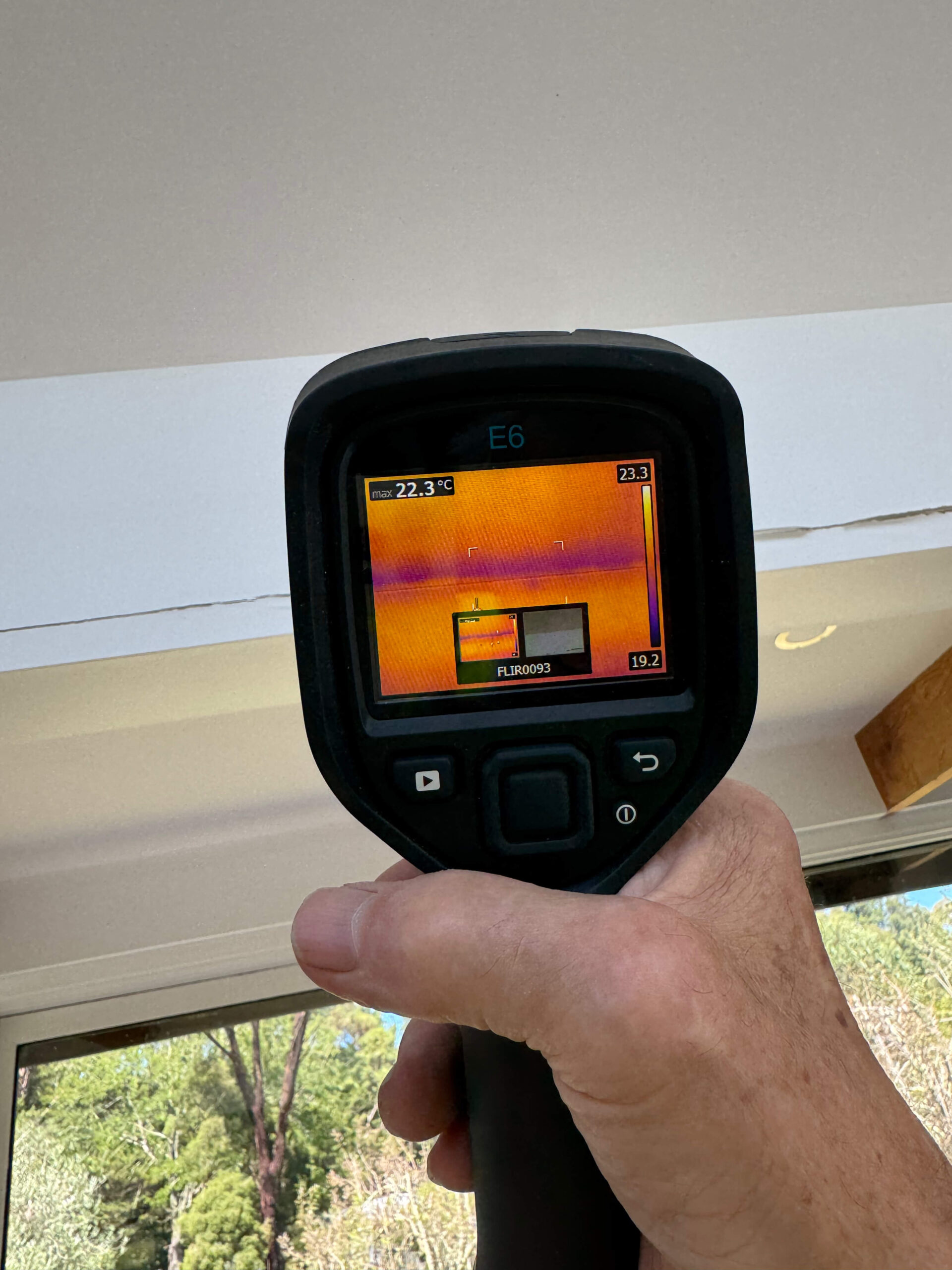
Thermal imaging shows surface temperature patterns. It does not see through walls or directly detect mould. We compare these patterns with moisture readings and site observations.