Flood Damage Restoration Melbourne
Flooded property? We remove water, check for contamination and dry wet materials. We help homes, businesses and strata properties across Melbourne.
Floodwater can spread under floors, behind walls and into cupboards. Absolute Restoration Service checks where the water came from and what is wet. We then explain what needs cleaning, removal or drying.
Need urgent flood assistance? Call 1300 114 842 for 24/7 phone assistance. We discuss your location, site safety and technician availability before arranging attendance.
Safety first: if water is in contact with live electricity, the building appears unstable, or there is an immediate threat to people, leave the affected area and call 000 or the relevant emergency authority. A plumber, electrician, roofer or other licensed trade may need to isolate or repair the source before restoration can safely proceed.
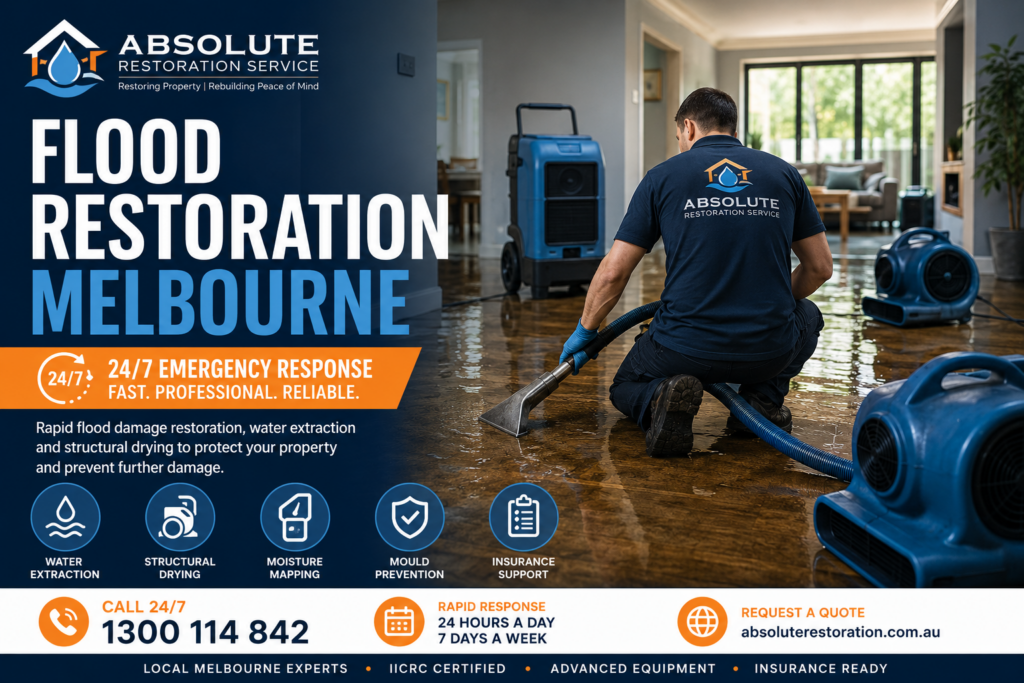
Commercial water extraction, moisture mapping and structural drying help limit secondary damage after property flooding.
Emergency Flood Restoration Services
Water Extraction
We use commercial water extractors to remove pooled water. Where suitable, we also extract water from wet carpet and other surfaces.
Moisture Mapping
We use moisture meters to find wet materials. We also check air temperature and humidity. Thermal images can help guide closer checks.
Structural Drying
Air movers help wet surfaces release moisture. Dehumidifiers remove moisture from the air. We check readings and adjust the equipment as drying progresses.
When Professional Flood Restoration Is Required
ARS responds to water-damage events involving:
- Burst, leaking or failed water pipes
- Flooded rooms, homes and commercial premises
- Stormwater and surface-water entry
- Sewage and drain overflows
- Appliance and hot-water system failures
- Roof, gutter and building-envelope failures
- Firefighting and suppression water
- Wet carpet, underlay and flooring systems
- Water migration into walls and cabinetry
- Commercial, strata and managed-property losses
Our Flood Damage Restoration Scope
- Emergency incident triage and site-safety review
- Water-source and contamination assessment
- Standing-water and wet-carpet extraction
- Moisture inspection, mapping and thermal imaging support
- Carpet, underlay, timber floor and floor-system assessment
- Commercial air movement and dehumidification
- Monitored structural drying and environmental readings
- Controlled removal of unsalvageable materials where agreed
- Cleaning and decontamination appropriate to the water source
- Photographs, moisture records and drying logs where included
- Mould assessment or remediation where indicated
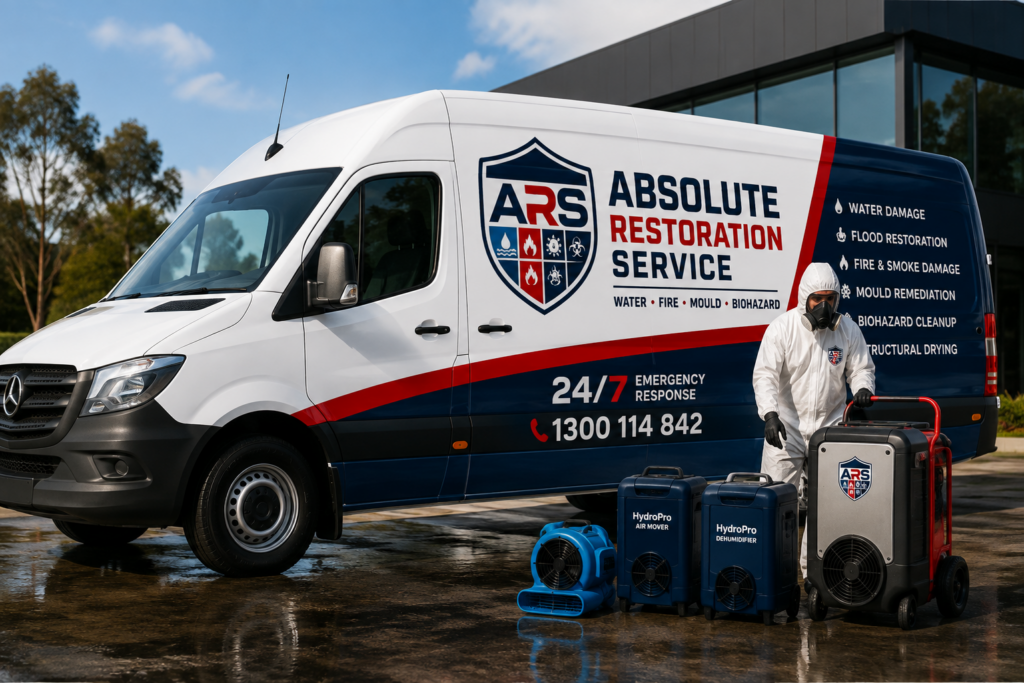
ARS supports residential, commercial and strata flood restoration across metropolitan Melbourne, subject to access and availability.
Our Six-Step Flood Restoration Process
1. Discuss the Flood and Site Conditions
We ask for your suburb, when the flooding started and which rooms are wet. We discuss the water source and any known hazards before arranging a visit.
2. Site Assessment and Moisture Mapping
We inspect the affected areas we can access. Moisture meters help us check where water has spread. If we find hidden damage during the work, we explain any changes needed.
3. Water Extraction
Once the area is safe, we remove standing water with commercial extraction equipment. We choose the method to suit the water source and wet materials.
4. Material and Contamination Decisions
We check the water source, how long materials have been wet and their condition. We explain which materials can be cleaned and dried, and which need removal.
5. Structural Drying and Monitoring
We place air movers and dehumidifiers to suit the building and wet materials. We take follow-up readings and adjust the equipment when needed.
6. Review, Documentation and Handover
We check accessible materials against the agreed drying goals. We provide the records included in your scope and explain any remaining work. Repairs may need a builder or another licensed trade.
Moisture Mapping and Structural Drying
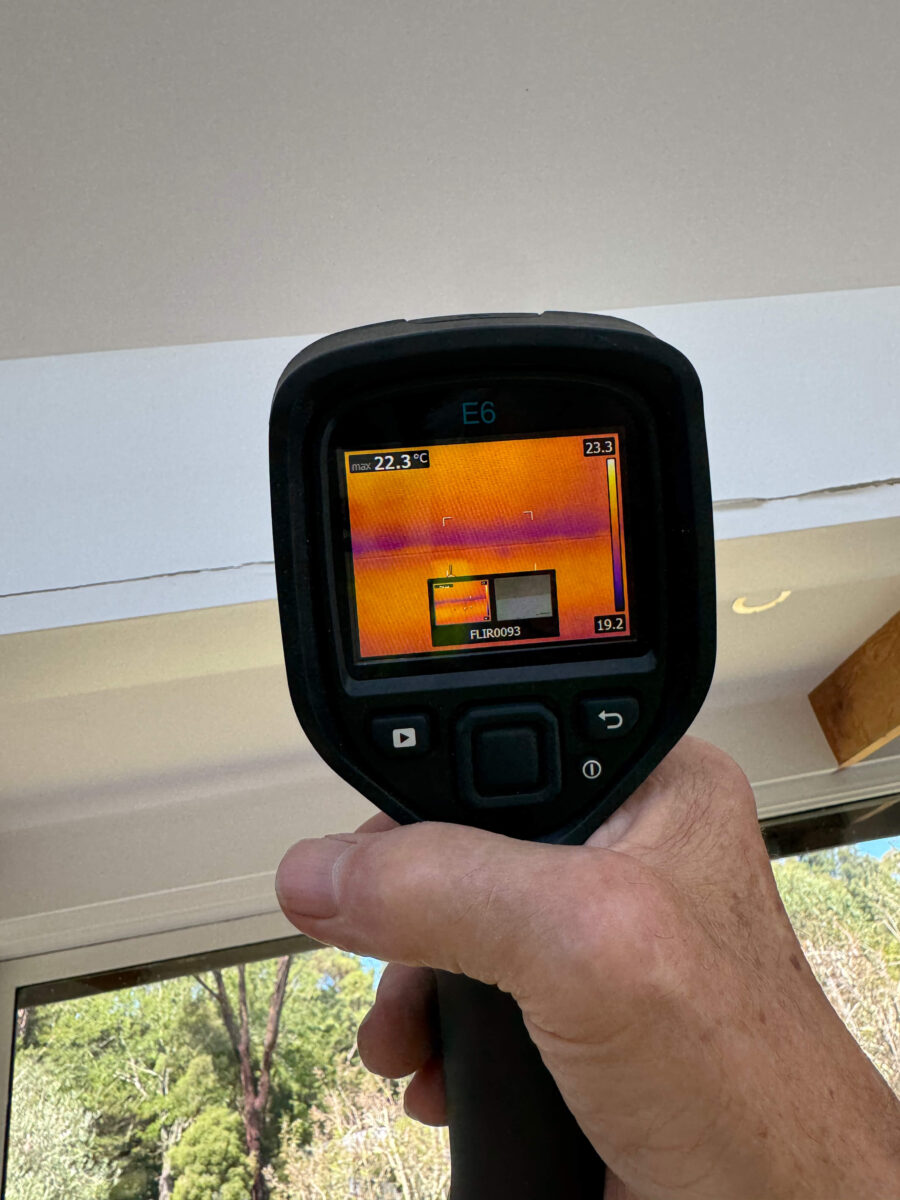
Thermal imaging can highlight temperature patterns, while moisture meters and site evidence help confirm affected materials.
Visible water is only part of the damage. Moisture may remain under floors, behind skirting boards and inside walls or cupboards.
Thermal imaging shows temperature patterns. It does not measure moisture directly. We use moisture meters and site checks to help confirm whether materials are wet.
Drying time depends on the materials, access and site conditions. We record readings to track progress towards the drying goals. The equipment stays in use according to these findings.
Learn more about structural drying in Melbourne.
Clean Water, Contaminated Water and Sewage
Even clean water can become contaminated after it enters a building or sits for some time. Sewage, drain overflows, stormwater and outdoor floodwater may carry contaminants.
We assess the water source and site conditions. This guides access restrictions, protective equipment, cleaning and material removal.
Materials that absorb contaminated water may need removal instead of drying and reuse. Do not use a domestic vacuum on sewage or outdoor floodwater. We explain the controls and cleaning needed for the affected areas.
View ARS biohazard and contaminated-water services.
Burst-Pipe and Water-Extraction Response
A burst pipe can soak floors, walls and cupboards. A suitable licensed trade may need to stop the water and make the source safe. ARS then checks where the water has spread, removes water and plans the drying work.
Early water removal may help save some materials. Others may need replacement if they are contaminated, swollen or damaged. We also check whether trapped moisture can be reached for drying.
For standing-water removal following a burst pipe or flood, learn more about our emergency water extraction Melbourne service.
Residential, Commercial and Strata Flood Restoration
ARS assists houses, apartments, offices, shops, warehouses, hospitality venues, schools and managed properties.
On larger sites, we may work in stages and isolate work areas. We discuss access with owners and managers, and coordinate with insurers and trades where needed.
Residential
Flooded rooms, wet flooring, burst pipes, appliance failures and stormwater damage in houses and apartments.
Commercial
Water extraction, drying and staged restoration for offices, retail, hospitality, education and industrial properties.
Strata
Assessment and documentation for affected lots, common areas, building managers and owners corporations.
Flood Damage and Mould Risk
Materials that stay damp can support mould growth. Prompt water removal and drying help reduce the risk. If we find mould or hidden dampness, we may recommend a separate mould inspection or mould remediation scope.
Insurance and Restoration Documentation
Where included in your scope, we provide photos, moisture readings, drying logs and notes on the damage. These records can support insurance claims.
Your insurer decides what the policy covers, what work it approves and what it will pay.
Why Choose Absolute Restoration Service?
- 24/7 telephone assistance for urgent flooding
- IICRC-trained restoration technicians
- Commercial extraction and drying equipment
- Moisture mapping and repeat monitoring
- Contaminated-water controls where required
- Residential, commercial and strata experience
- Clear scopes and project documentation where agreed
- Melbourne service coverage subject to availability
Related Water and Restoration Services
- Emergency Flood Cleanup Melbourne
- Water Damage Restoration Melbourne
- Structural Drying Melbourne
- Moisture Investigation Melbourne
- Mould Removal Melbourne
- Emergency Restoration Services Melbourne
Frequently Asked Questions
How quickly should flood restoration begin?
Call as soon as it is safe. Early checks and water removal may help save wet materials. Follow emergency advice and have electrical or building hazards made safe before restoration starts.
Does ARS repair the burst pipe or roof leak?
ARS removes water, checks moisture and manages cleaning and drying. A plumber, roofer or another licensed trade may need to stop the leak and make the source safe before our work starts.
Can all wet materials be dried in place?
No. We check the water source, material condition and access for drying. Some materials can be cleaned and dried. Others need removal because they are contaminated, swollen or damaged.
How long does structural drying take?
Drying time varies. It depends on the wet materials, water source, access, weather and site conditions. We use follow-up readings to track progress against the drying goals.
Can flooding cause mould?
Yes. Materials that stay damp can support mould growth. Prompt water removal and drying help reduce the risk. Existing mould or hidden dampness may need further checks and treatment.
Does ARS restore sewage and external floodwater damage?
Yes. We assess damage from sewage, drain overflows and outdoor floodwater. We plan access controls, protective equipment, material removal and cleaning to suit the contamination.
Can ARS provide insurance documentation?
Yes, where included in your scope. We provide photos, moisture readings, drying logs and advice on further work. Your insurer decides policy cover and the claim outcome.
Arrange Flood Damage Restoration in Melbourne
Call 1300 114 842 for urgent flood assistance. For non-urgent enquiries, request a property assessment online.