Signs a Moisture Investigation May Be Needed
- Water staining on walls or ceilings
- Bubbling paint, softened plaster or damaged skirtings
- Persistent damp or musty odours
- Recurring mould after surface cleaning
- Wet carpet, lifting flooring or swollen cabinetry
- Condensation on windows or cold surfaces
- Water entry after storms
- Suspected roof, plumbing or waterproofing defects
- Damp subfloor or crawl-space conditions
- Unexplained changes following a leak or flood
Our Moisture Investigation Process
- Discuss the problem: we ask when it started, which rooms are affected and whether there have been leaks or repairs.
- Inspect accessible areas: we check surfaces, joints and nearby services for signs of dampness and water entry.
- Take moisture readings: we use suitable meters to compare materials and find areas with elevated readings.
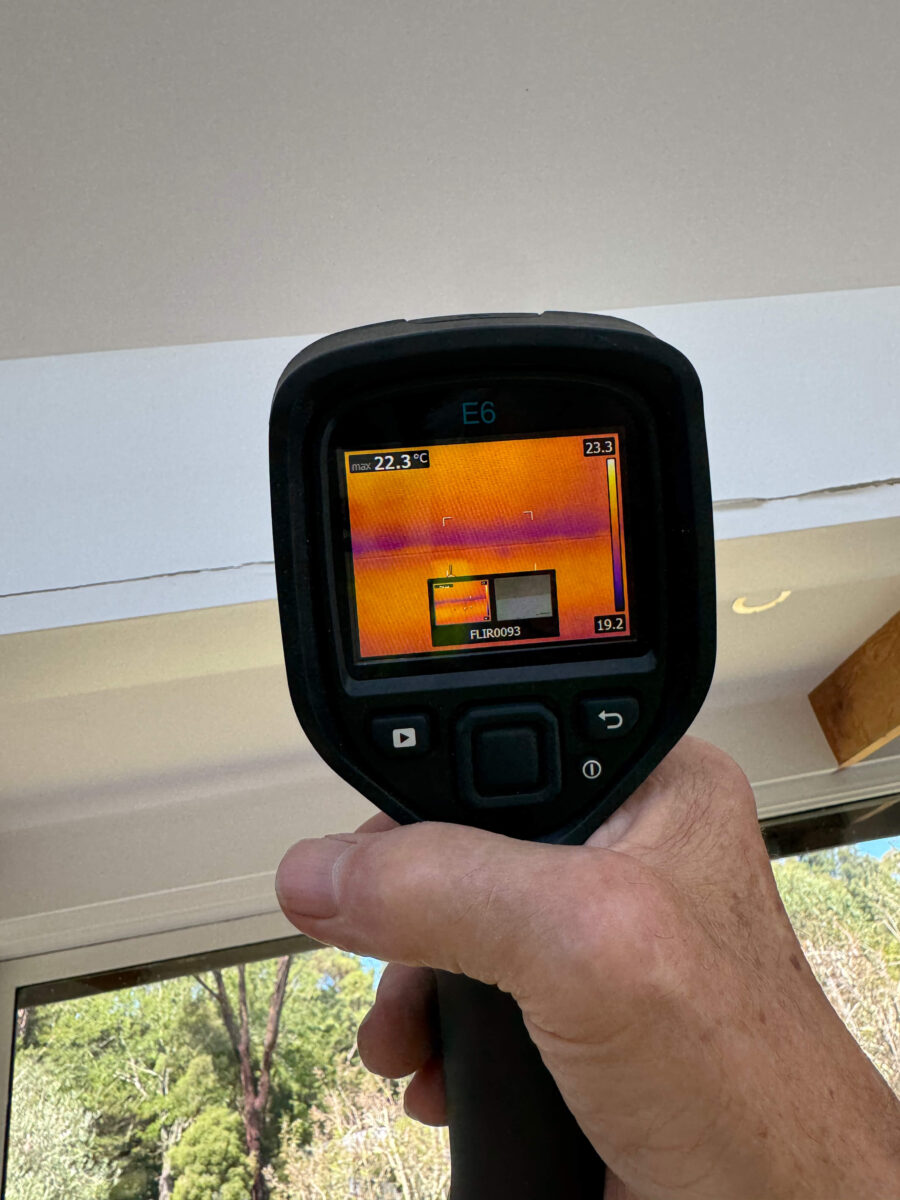
- Review thermal images: we look at surface-temperature patterns where useful and compare them with moisture readings and site findings.
- Map affected areas: we record where moisture is found to guide drying or further checks.
- Explain the next steps: these may include trade repairs, drying, mould checks or monitoring. Opening a wall or floor for further checks needs authorisation.
How We Use Thermal Imaging
A thermal camera shows differences in surface temperature. These patterns can be affected by dampness, air leaks, insulation, sunlight or heating.
The camera does not see through walls or directly measure moisture. It does not detect mould.
We compare thermal patterns with moisture-meter readings, site observations and the property history. An image alone is not proof of a leak.
Common Moisture Sources
- Plumbing leaks and appliance failures
- Roof, gutter or flashing defects
- Stormwater and external water entry
- Failed or incomplete waterproofing
- Condensation and limited ventilation
- Ground or subfloor moisture
- Drainage and grading problems
- Previous water damage that was not fully dried
We may identify a likely moisture source or water path. A suitable licensed contractor may need to confirm the fault and carry out repairs.
For persistent dampness in lower masonry walls, read about our rising damp assessment in Melbourne. An inspection helps distinguish suspected rising damp from other moisture sources.