Rising Damp Melbourne
Damp walls, peeling paint or salt marks? Call 1300 114 842 to discuss a moisture assessment.
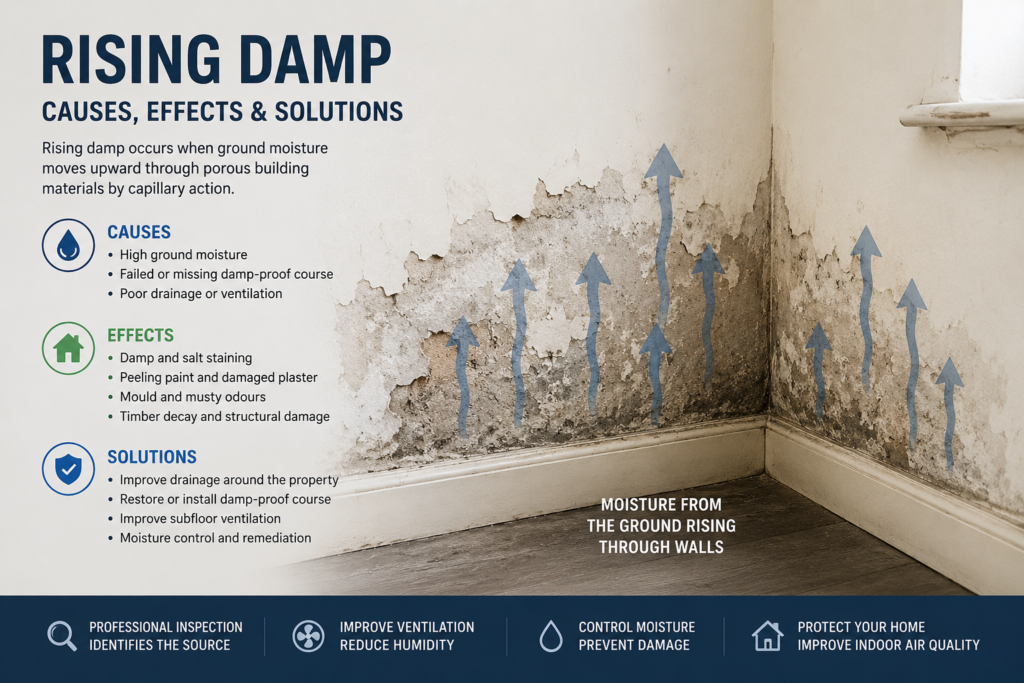
Damp patches, damaged plaster and peeling paint need assessment to establish the moisture source.
Absolute Restoration Service investigates suspected rising damp and other moisture problems across Melbourne. We assess accessible areas, record findings and explain the next steps.
What Is Rising Damp?
Rising damp is ground moisture drawn upward through porous masonry, such as brick, stone and mortar. This movement is called capillary action.
Signs and damage associated with dampness may include:
- Mould growth
- Peeling paint
- Salt staining (efflorescence)
- Timber decay
- Damage to plaster and finishes
- Poor indoor air quality
- Expensive structural repairs
These signs can have other causes. An assessment is needed before deciding whether rising damp is responsible.
Rising Damp and Other Moisture Sources
A damp-proof course is a barrier that helps stop ground moisture moving up a masonry wall. Rising damp may occur where this barrier is missing, ineffective or bridged by materials around it.
We also look for other causes of dampness and conditions that may add moisture:
- Missing, damaged or bridged damp-proof courses
- High ground moisture
- Poor site drainage
- Clay soils
- Sloping blocks
- Blocked subfloor vents
- Inadequate underfloor ventilation
- Plumbing leaks beneath the building
Older buildings may have limited or ineffective damp-proofing. A damp wall alone does not establish the cause.
Why Subfloor Ventilation Matters

Subfloor ventilation helps move air beneath a suspended floor. The moisture source and any damp-proofing concerns also need assessment.
Limited airflow can allow moisture to build up beneath a suspended floor.
A damp subfloor may contribute to musty smells, mould and timber damage. We assess airflow alongside leaks, drainage and ground moisture.
Where suitable, improved subfloor airflow can help with:
- Reducing trapped subfloor moisture
- Managing humidity when outside conditions suit ventilation
- Improve airflow
- Reduce mould risk
- Protect structural timbers
- Improve indoor air quality
Fans may help where natural airflow is limited. Ventilation does not repair a failed damp-proof course or stop water entering the building. Drainage or damp-proofing repairs may also be needed.
Understanding NCC Dampness & Ventilation Requirements
Moisture control and ventilation need to suit the building, site and proposed work. Where approval or a formal compliance assessment is needed, confirm the applicable requirements with the relevant building professional.
Good moisture management helps:
- Protect building materials
- Reduce mould growth
- Improve indoor air quality
- Extend the life of the building
We assess whether ventilation is part of the moisture-control plan. Building faults and damp-proofing concerns may need a suitable specialist.
Our Rising Damp Assessment
We investigate suspected dampness across Melbourne. We discuss when it started, where it appears and any previous leaks or repairs.
Our assessments include:
- Moisture mapping
- Thermal imaging
- Rising damp inspections
- Subfloor inspections
- Ventilation assessment
- Humidity testing
- Mould risk assessment
- Recommendations for remediation and moisture control
We compare site observations with readings and the property history. Thermal images show temperature patterns; they do not directly measure moisture.
We explain the likely moisture sources and any limits to the inspection. Specialist checks may be needed before recommending damp-proofing work.
Related Services
If rising damp has already caused mould or water damage, we can also assist with:
- Mould Removal Melbourne
- Subfloor Ventilation Melbourne
- Water Damage Restoration Melbourne
- Indoor Air Quality Assessments
- Mould Inspections Melbourne
Areas We Service
We provide rising damp inspections throughout metropolitan Melbourne, including:
- Greensborough
- Diamond Creek
- Montmorency
- Eltham
- Doncaster
- Heidelberg
- Preston
- Bulleen
- Melbourne CBD
- Greater Melbourne
External Link: Industry Resources
These Australian government resources provide general information on building moisture and indoor conditions.
National Health and Medical Research Council (NHMRC) – Research and guidance on health and indoor environments.
National Construction Code (NCC) – Australian building requirements, including moisture management and ventilation.
Frequently Asked Questions
What causes rising damp?
Rising damp occurs when ground moisture is drawn up through masonry. A missing, ineffective or bridged damp-proof course may allow this. Other moisture sources need to be considered during assessment.
Can rising damp cause mould?
Damp materials can support mould growth. We assess the moisture source and any visible mould. Existing mould may need separate remediation alongside moisture repairs.
Is rising damp common in Melbourne?
It can affect Melbourne properties, including older masonry buildings. Dampness may also come from leaks, rainwater entry or condensation. An inspection helps distinguish the possible causes.
Does poor subfloor ventilation make rising damp worse?
Poor airflow can add to damp subfloor conditions. Improving ventilation may help, but it does not repair a failed damp-proof course. The wall and moisture sources need their own assessment.
Does rising damp always require damp-proofing?
The treatment depends on the confirmed cause. Some dampness needs leak or drainage repairs. Confirmed rising damp may need specialist work to the damp-proof course. Ventilation may support a wider moisture-control plan.
How do you inspect for rising damp?
We inspect accessible areas, take suitable moisture readings and review the property history. We may use thermal imaging and assess the subfloor. The findings guide further checks, repair referrals or restoration work.
Book a Rising Damp Inspection
Absolute Restoration Service provides professional water damage restoration, fire and smoke damage restoration, mould remediation, and indoor air quality solutions across Melbourne and Victoria. Rated 4.9/5 from 769 reviews on HiPages.
Arrange an assessment if damp patches, salt marks or peeling paint keep returning. Finding the cause helps guide suitable repairs and restoration.
Absolute Restoration Service provides moisture investigations, suspected rising damp inspections, subfloor assessments and mould checks across Melbourne.
Call 1300 114 842 or contact us online to discuss an assessment and available appointment times.