Flood damage restoration involves more than removing visible water. The work may include safety checks, water extraction, moisture checks, cleaning and drying. Some materials may need removal. Records help explain the work completed.
These ten points explain what happens after water damage in a Melbourne property. They can help you ask questions after a burst pipe, storm, appliance failure or roof leak.
1. Safety Comes Before Restoration
Stay out of areas with suspected electrical, gas or chemical hazards. Weak structures, sewage, fire damage and active flooding can also make access unsafe. Follow emergency-service directions. The power provider or a suitable licensed trade may need to make the area safe.
If a property is flooding or about to flood, contact VICSES on 132 500; call 000 for a life-threatening emergency. Restoration starts only when access is suitable and the source or hazard has been addressed.
2. The Water Source Changes the Response
A burst clean-water pipe, stormwater and sewage need different responses. We check where the water came from, how long it has been there and what it has touched. These findings guide protective gear, access, cleaning and material removal.
Water can pick up contaminants as it passes through a building or sits for some time. Each job needs its own assessment and records. The drying plan must suit the conditions found.
3. Extraction Is Only the First Stage
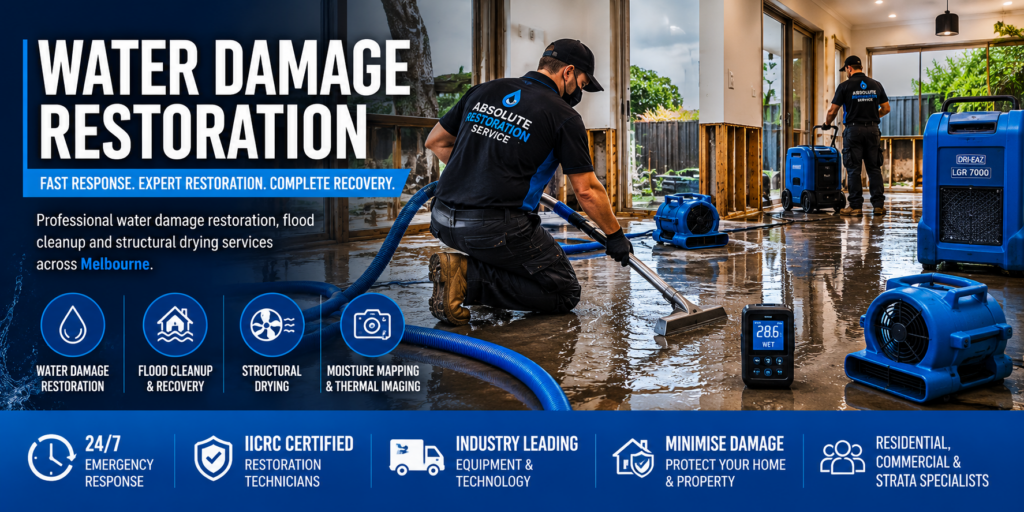
Pumps and extractors remove standing water. Moisture can still remain in carpet, underlay, floors, walls and cupboards. Insulation, skirting and subfloors may also be wet. Each affected material needs a check before drying or removal.
Early water removal leaves less moisture for materials to release during drying. It does not prove that hidden layers are dry or ready for repairs.
4. Check for Hidden Moisture
Water can travel beneath floors, along wall bases and into ceilings or subfloors. Moisture meters help compare wet materials with suitable reference areas. Thermal images can show temperature patterns that need closer checks.
A thermal camera cannot see through walls, directly measure moisture or detect mould. Areas hidden behind fixed finishes may need further checks. An inspection cannot confirm the condition of every cavity without access.
5. Materials Dry at Different Rates
Timber, plasterboard, brick, carpet and insulation take up and release water at different rates. Cabinets, wall coverings and tightly fitted finishes can trap moisture or slow drying.
The drying plan considers how the building is put together and which wet areas we can reach. Airflow, dehumidifiers, temperature and outdoor conditions also matter. We check and adjust equipment as the job progresses.

6. Drying Time Varies
There is no single drying time for every property. It depends on the wet materials, water source, access, weather and equipment. Hidden layers can take longer to reach and dry.
Repeat moisture readings show progress against the drying goals. We also check the equipment and record the results. Ongoing leaks, contamination or building work may mean drying needs to pause.
7. Wet Carpet Is Assessed Case by Case
Some wet carpet can be saved. We assess the water source, how long it has been wet and any contamination. We also check the carpet, glue, underlay and floor beneath. A dry carpet surface does not prove that every layer is dry.
Before new flooring is installed, the base beneath it must be checked. It needs to be suitable for the chosen floor system.
8. Persistent Moisture Can Support Mould Growth
Mould can grow on building materials that stay damp. Stopping the source, removing water and drying suitable materials helps reduce that time. Hidden areas may still need further checks.
Visible mould, repeated musty smells or materials left wet may need a separate mould-remediation scope. Drying alone does not remove contamination from affected materials.
9. Keep Clear Records
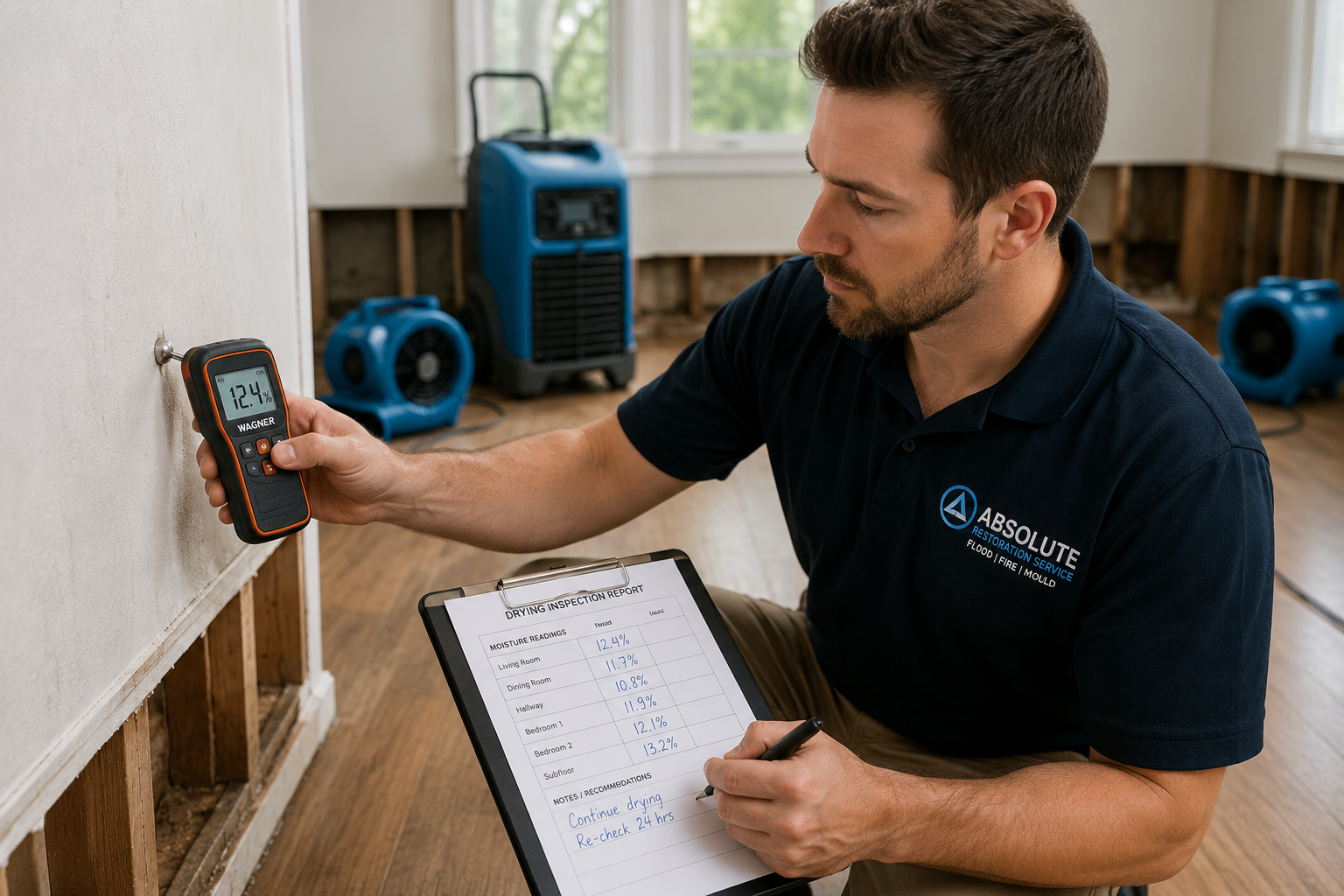
Photos, moisture maps, equipment records and site notes help explain the damage and work completed. Record when the damage was found, its source and the rooms affected. Note any urgent steps taken.
Contact your insurer promptly if a claim may apply. Your policy and insurer determine cover. Take photos before disposal when safe and list damaged items. Ask your insurer before approving non-urgent building work.
10. Know What Work Is Complete
At handover, ask what work is complete and what remains. The records should cover drying results, removed materials and source repairs still needed. They should also explain areas outside the agreed scope. Further checks or repairs may be recommended.
Restoration may finish before all building repairs are complete. Roofing, plumbing, waterproofing, electrical work or repairs to finishes may still need the right trades.
What to Do Immediately After Water Damage
- Keep people away from electrical, structural and contamination hazards.
- Stop the source only when it can be done without risk.
- Contact emergency services or licensed trades where required.
- Photograph affected rooms and items when safe.
- Notify the insurer and ask about emergency-work requirements.
- Avoid switching on wet electrical equipment.
- Do not lift flooring, open walls or disturb suspect materials without an assessment.
- Arrange professional water extraction and moisture assessment.
Flood Damage Restoration in Melbourne
Absolute Restoration Service provides water damage restoration in Melbourne. The agreed work may include water extraction, moisture mapping, structural drying and follow-up readings. We provide the handover records included in your scope.
Our IICRC-trained team helps homes and businesses after water damage. Call 1300 114 842 or contact ARS. Tell us what happened, which rooms are wet and any known hazards or access limits.
Frequently Asked Questions
What should I do first after flood water enters a property?
Put safety first and follow emergency-service directions. Use the right licensed trades to address hazards. Take photos and notes only when it is safe.
Is water extraction the same as flood damage restoration?
No. Extraction removes standing water. Restoration may also include moisture checks, cleaning, material removal and structural drying. Readings and handover records help explain the results.
How long does structural drying take?
Drying time varies with the materials, how wet they are, access and site conditions. The water source must also be controlled. Repeat readings help track progress.
Can wet carpet be saved?
Sometimes. We check the water source, contamination, carpet, underlay and floor beneath. We also assess whether each wet layer can be reached and dried.
Can flood damage cause mould?
Yes. Mould can grow when materials stay damp. Prompt water removal and controlled drying help reduce the time materials remain wet.
Will insurance cover flood restoration?
It depends on your policy, the cause, exclusions and the insurer’s decision. Record the damage and contact your insurer promptly.