Crawl Space Mould Removal Melbourne
Crawl space and subfloor mould removal across Melbourne. We investigate dampness, clean affected materials and recommend moisture-control work.
Mould can grow out of sight beneath a suspended floor. You may notice musty smells or dampness before seeing the growth.
Absolute Restoration Service inspects accessible crawl spaces and subfloors. We check visible mould, investigate moisture and explain what needs cleaning, removal or repair.
For advice or an inspection, call 1300 114 842 or request assistance online. Service availability depends on location, access and site conditions.
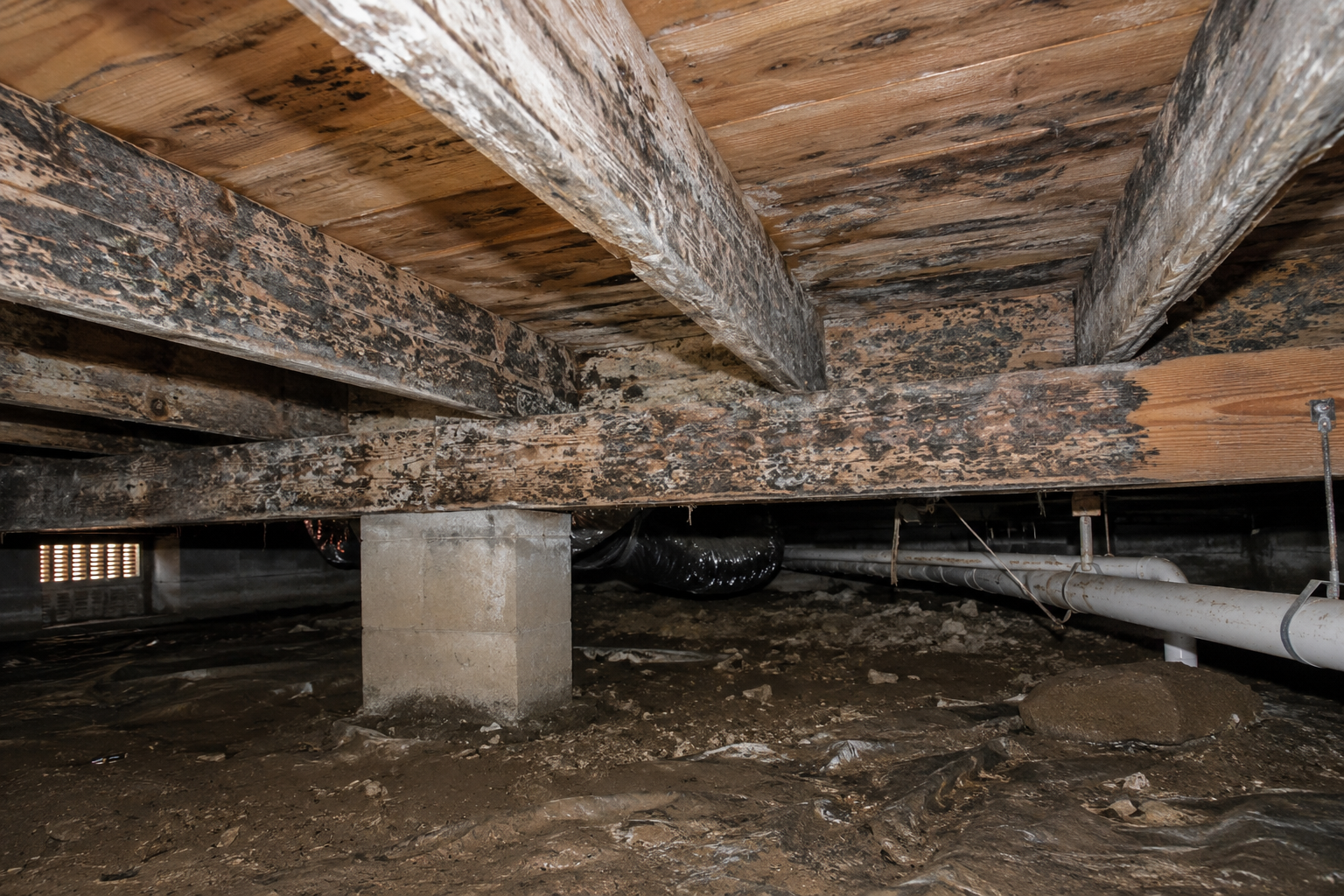
Mould contamination on timber floor joists beneath a suspended floor.
Signs of Mould Beneath Your Home
A subfloor problem is not always visible from inside the property. Warning signs may include:
- Persistent musty or earthy odours
- Visible mould on joists, bearers, flooring or insulation
- Damp soil, standing water or condensation beneath the building
- Staining, softness or decay affecting structural timber
- High indoor humidity or recurring condensation
- Mould appearing near skirting boards, floor edges or service penetrations
- Problems that worsen after rain or plumbing leaks
- Blocked vents or limited airflow through the subfloor
These signs can have several causes. An inspection helps us assess the mould and check whether leaks, drainage or limited airflow are contributing.
What Causes Crawl Space Mould?
Mould grows where moisture is available. Sources beneath a home may include:
- Leaking water, waste or drainage pipes
- Rainwater or stormwater entering beneath the building
- Poor site drainage or ground levels directing water toward the home
- Damp soil and evaporation into an enclosed crawl space
- Insufficient, obstructed or poorly positioned subfloor vents
- Condensation on cool timber, pipes or flooring materials
- Rising damp or moisture moving through masonry
- Past flooding or water damage that was not fully dried
Mould may return if the moisture source remains. Leaks, drainage faults and building damage may need repair by a suitable licensed trade alongside the mould removal work.
Our Crawl Space Mould Remediation Process
1. Site and Access Assessment
We check the access, visible mould and affected materials. Low clearance, electrical hazards, pests, suspected asbestos or unstable structures may need extra controls or specialist assessment before work proceeds.
2. Moisture Investigation
We inspect damp areas and use suitable moisture meters to help investigate the source. We explain which moisture problems need attention before or alongside mould removal.
3. Remediation Scope and Controls
We plan the work to suit the materials, mould and access. Controls may include restricted entry, barriers and HEPA air filtration to help limit the spread of particles.
4. HEPA Cleaning and Mould Removal
We clean accessible affected surfaces using methods suited to timber and other materials. This may include HEPA vacuuming and detailed cleaning. Materials that cannot be restored may need removal under the agreed scope.
5. Drying and Moisture Management
Where needed, we use drying equipment and follow-up moisture readings. We may also recommend repairs to drainage or leaks, ground-moisture controls or subfloor ventilation.
6. Final Review
We review accessible work areas against the agreed scope. We provide the records included in your quote and explain any remaining work. Larger or sensitive projects may also need independent verification.
Why Choose Absolute Restoration Service?
- IICRC-trained restoration technicians
- Experience with residential, rental, strata and commercial properties
- Professional moisture investigation and HEPA equipment
- Remediation plans tailored to access and building conditions
- Clear scope, practical recommendations and supporting documentation where agreed
- Melbourne-wide service coverage subject to availability
Related Mould and Moisture Services
- Mould Removal Melbourne
- Mould Inspection Melbourne
- Rising Damp and Moisture Control
- Subfloor Ventilation Melbourne
- Indoor Air Quality Assessment Melbourne
- Water Damage Restoration Melbourne
Frequently Asked Questions
How do I know whether there is mould in my crawl space?
Musty smells, damp soil, visible growth or timber staining may point to a problem beneath the floor. Problems may worsen after rain. An inspection helps assess accessible areas and possible moisture sources.
Can crawl-space mould affect rooms above it?
Air and odours can move through gaps around floors, pipes and other openings. The amount depends on the building, airflow and moisture conditions. We assess the property to investigate the source of the concern.
Can I clean mould under the house myself?
Crawl spaces can have low clearance, electrical hazards, contaminated dust, pests or unsafe materials. Arrange a professional assessment if mould is widespread, keeps returning, is hard to reach or follows water damage.
Will mould return after remediation?
Mould can return if damp conditions remain. Cleaning needs to be combined with moisture control, which may include fixing leaks or drainage and improving suitable ventilation.
Do you install subfloor ventilation?
Yes. We assess airflow and provide subfloor ventilation where suitable. Active leaks, drainage faults and other moisture sources still need to be addressed.
Do you provide crawl-space mould removal across Melbourne?
We service metropolitan Melbourne and selected surrounding areas. Call 1300 114 842 to discuss your location, access and the work needed. We confirm attendance based on availability and site conditions.
Arrange a Crawl Space Mould Inspection
If musty smells, damp soil or mould keep returning, arrange an assessment. We investigate accessible areas and explain the next steps.
Call 1300 114 842 or contact Absolute Restoration Service to discuss crawl space mould removal in Melbourne.